Introduction
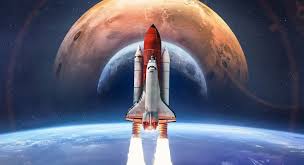
For centuries, Mars has fascinated humankind as a mysterious red dot in the night sky — a symbol of adventure, science, and the quest to understand our place in the universe. Today, Mars stands at the center of humanity’s greatest ambition: to become a multi-planetary species.
The exploration and eventual colonization of Mars are no longer the stuff of science fiction. With advances in rocketry, robotics, and artificial intelligence, space agencies and private companies are laying the groundwork for a new era of interplanetary living. Yet, turning this dream into reality involves immense scientific, technological, and ethical challenges.
This article explores the history, present, and future of Mars exploration, the challenges of colonization, and the profound impact that living on another world will have on humanity.
Journey So Far: Humanity’s Exploration of Mars
Early Discoveries
Mars has long intrigued scientists because of its similarities to Earth. It has mountains, valleys, polar ice caps, and evidence of ancient rivers and lakes. In the late 19th century, telescopic observations led some astronomers to speculate that intelligent life once existed on Mars.
By the mid-20th century, with the dawn of the space age, exploration moved from imagination to reality. The Mariner missions of the 1960s and 1970s provided the first close-up images of Mars, revealing a cold, dry, and lifeless planet.
The Era of Rovers and Orbiters
NASA’s Viking missions (1975–1976) were the first to land successfully on Mars, conducting experiments to search for microbial life. While they found no conclusive evidence, they laid the foundation for future missions.
In the 21st century, robotic exploration entered a golden age:
- Spirit and Opportunity (2004) explored the Martian surface for years, far exceeding their life expectancies.
- Curiosity (2012) and Perseverance (2021) analyzed rock and soil samples, confirming that Mars once had conditions suitable for life.
- The Ingenuity helicopter made history by achieving the first powered flight on another planet.
- Meanwhile, orbiters from NASA, ESA, ISRO, and the UAE map the planet in extraordinary detail, studying its atmosphere, weather, and geology.
International and Private Participation
Mars exploration is now a global effort. China’s Tianwen-1 mission successfully deployed an orbiter and rover (Zhurong) in 2021. The European Space Agency and Russia have collaborated on the ExoMars program, while the UAE’s Hope Probe studies the planet’s climate.
Private companies like SpaceX and Blue Origin are also entering the race — not just to explore Mars, but to settle it.
Why Mars?
Mars is the most Earth-like planet in our solar system, offering the best chance for human habitation. It has a 24.6-hour day, gravity about one-third that of Earth’s, and an atmosphere (though thin) that can be used for resource extraction.
Moreover, Mars has abundant water ice, which can be converted into drinking water, oxygen, and rocket fuel. Its proximity — about 55 million kilometers away at closest approach — makes it more accessible than the outer planets.
Beyond scientific curiosity, Mars represents a survival imperative. Visionaries like Elon Musk argue that humanity must become a multi-planetary species to ensure its long-term survival against natural or human-made disasters on Earth.
The Next Steps in Mars Exploration
1. Sample Return Missions
One of the most important upcoming missions is the Mars Sample Return (MSR), a collaboration between NASA and ESA. Scheduled for the early 2030s, it will bring Martian rock and soil samples back to Earth for the first time. These samples may reveal signs of ancient microbial life and help scientists prepare for future human missions.
2. Human Missions to Mars
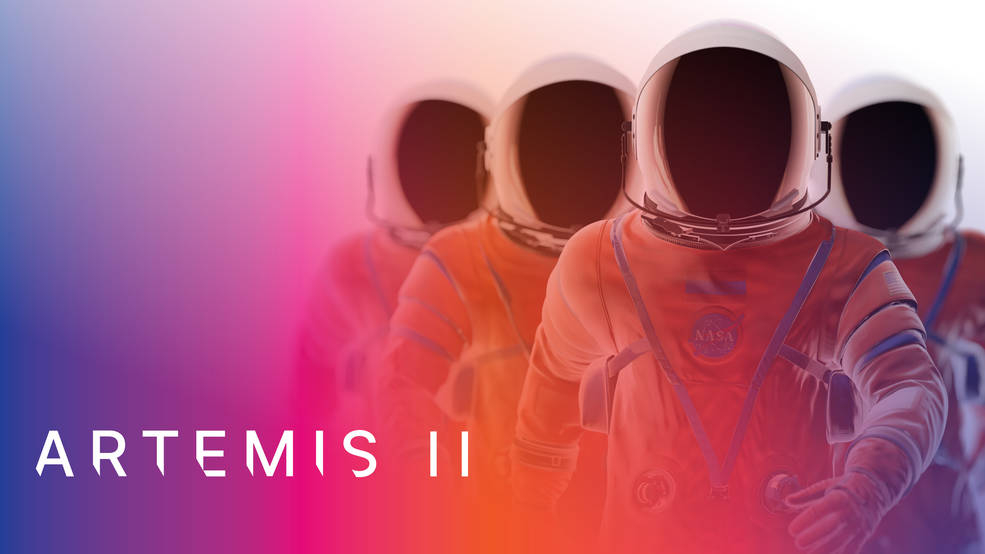
NASA’s Artemis Program aims to return humans to the Moon by the mid-2020s as a stepping stone to Mars. The agency’s long-term goal is to send astronauts to Mars by the 2030s.
SpaceX, on the other hand, plans to send cargo missions — and eventually humans — aboard its massive Starship spacecraft within the next decade. If successful, this would mark the beginning of sustained human presence on another planet.
3. Technological Foundations
Human exploration will require breakthroughs in several key technologies:
- Advanced propulsion systems, such as nuclear or ion engines, to reduce travel time.
- Life support systems capable of recycling air, water, and waste.
- Radiation shielding to protect astronauts from cosmic rays.
- Habitat construction using local materials (regolith).
- Autonomous robotics for construction, mining, and maintenance.
The Challenges of Colonizing Mars
While the vision is inspiring, Mars is a harsh and unforgiving world.
. Harsh Environment
Mars’ atmosphere is mostly carbon dioxide, with less than 1% of Earth’s air pressure — far too thin to breathe or protect against radiation. Temperatures can plunge to -100°C at night, and dust storms can envelop the planet for months.
Radiation
Without a magnetic field, Mars is constantly bombarded by cosmic rays and solar radiation. Long-term exposure can cause cancer, neurological damage, and other health problems. Future habitats will need to be built underground or shielded by thick layers of regolith.
Psychological and Social Challenges
The distance from Earth means astronauts will experience isolation, confinement, and communication delays of up to 22 minutes each way. Creating strong social structures and mental health support systems will be as crucial as physical survival.
Economic and Ethical Issues
The cost of Mars colonization is enormous — potentially trillions of dollars. Moreover, questions about ownership, governance, and environmental protection must be addressed. Should Mars be treated as a “global commons” or open for commercial exploitation? How do we prevent biological contamination of an alien world?
Terraforming and the Long-Term Vision
Beyond initial colonies, some scientists dream of terraforming Mars — transforming its environment to make it more Earth-like.
Ideas include:
- Releasing greenhouse gases to warm the planet.
- Using orbital mirrors to reflect sunlight onto the surface.
- Introducing photosynthetic organisms to produce oxygen.
However, such projects would take centuries and raise ethical questions about altering another planet’s ecosystem.
In the nearer term, humanity may establish self-sufficient habitats with artificial ecosystems, hydroponic farms, and renewable energy systems — creating sustainable “micro-Earths” within domed cities.
Role of AI and Robotics
Before humans can thrive on Mars, robots will do most of the heavy lifting. AI-powered machines will construct habitats, mine resources, and conduct repairs autonomously.
AI will also manage life-support systems, monitor health, and assist with scientific research. These technologies will make Mars safer and more habitable for future settlers.
New Era of Human Civilization
The colonization of Mars will mark a turning point in human history — the moment we become an interplanetary civilization. It will change how we view ourselves, our planet, and our responsibilities as stewards of life.
A successful Mars colony would not just expand our physical presence; it would expand our cultural, scientific, and philosophical horizons. Mars could become a laboratory for innovation — testing new technologies, governance models, and ways of life that could benefit Earth as well.