Introduction
The concept of space tourism — civilians traveling beyond Earth for leisure, adventure, and exploration — was once the stuff of science fiction. Today, it is becoming one of the most fascinating and rapidly growing frontiers of the 21st century. With the rise of private aerospace companies such as SpaceX, Blue Origin, and Virgin Galactic, the dream of ordinary people venturing into space is transforming into reality.
Space tourism represents a new chapter in human innovation, blending technology, luxury, and adventure in ways that redefine travel itself. From suborbital joyrides to potential stays in orbiting hotels, this industry promises not only to expand our horizons but also to inspire future generations to look upward and dream bigger.
The Evolution of Space Tourism
The idea of space tourism emerged alongside the early achievements of space exploration in the 1960s. However, it wasn’t until the beginning of the 21st century that it became a reality.
In 2001, Dennis Tito, a wealthy American engineer and entrepreneur, became the world’s first space tourist. He paid approximately $20 million to travel aboard a Russian Soyuz spacecraft to the International Space Station (ISS), where he spent eight days in orbit. Tito’s journey marked the birth of a new industry — one that promised to make space travel accessible beyond government astronauts.
For nearly two decades, progress was slow, primarily due to high costs and technical limitations. But the emergence of commercial spaceflight companies reignited interest and innovation. Today, several private companies are racing to make space tourism not just possible but also profitable and sustainable.
Major Players in the Space Tourism Industry
Virgin Galactic
Founded by Sir Richard Branson, Virgin Galactic is one of the pioneers of suborbital space tourism. Its spacecraft, VSS Unity, is carried into the upper atmosphere by a mothership before igniting its rocket engine to reach altitudes of about 85 kilometers (53 miles) — just beyond the edge of space.
Passengers experience several minutes of weightlessness and witness the curvature of the Earth against the darkness of space. Tickets for Virgin Galactic’s flights have been priced around $450,000 per seat, and commercial operations officially began in 2023.
Blue Origin
Founded by Jeff Bezos, Blue Origin’s New Shepard rocket offers a fully autonomous suborbital experience. Passengers board a capsule that launches vertically, crosses the Kármán line (100 kilometers above Earth), and provides about four minutes of microgravity before safely returning via parachute.
In 2021, Bezos himself joined the inaugural crewed flight, symbolizing the beginning of a new commercial era. Blue Origin emphasizes both safety and reusability, aiming to make space tourism more routine and accessible in the future.
SpaceX
Elon Musk’s SpaceX has taken space tourism to the next level by focusing on orbital and deep space missions. In 2021, the company successfully launched Inspiration4, the first all-civilian mission to orbit the Earth for three days aboard a Crew Dragon capsule.
SpaceX has also partnered with Axiom Space to transport private astronauts to the ISS and has ambitious plans to take tourists around the Moon aboard the Starship spacecraft. Ticket prices for such missions range from tens of millions to over $100 million per person — making it the ultimate luxury travel experience.
Axiom Space and Orbital Assembly Corporation
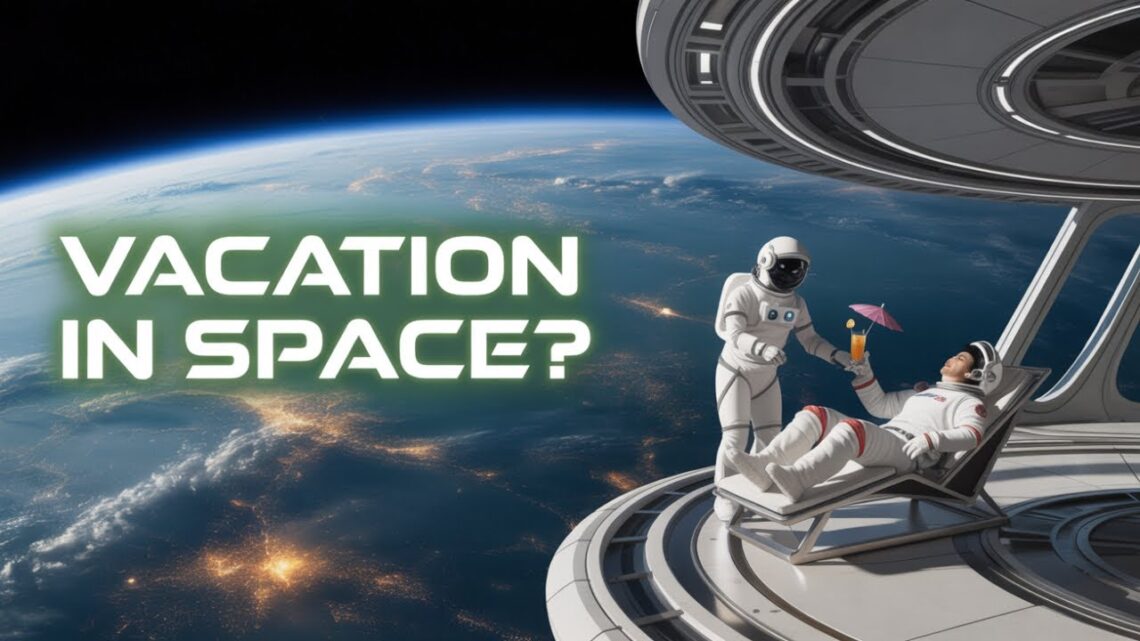
Companies like Axiom Space are developing commercial space stations that will serve as research hubs and future “space hotels.” Meanwhile, Orbital Assembly Corporation plans to build the Voyager Station, a luxury space hotel featuring restaurants, gyms, and suites with Earth views — expected to open by the early 2030s.
These developments suggest that space tourism will evolve from short suborbital flights to multi-day orbital stays, transforming the very concept of hospitality and travel.
Types of Space Tourism
The industry currently divides space tourism into three primary categories:
1. Suborbital Tourism
Passengers briefly cross the boundary of space, experiencing weightlessness and seeing Earth’s curvature before returning to the surface. Companies like Virgin Galactic and Blue Origin dominate this market.
2. Orbital Tourism
Travelers orbit the Earth for extended periods, as Dennis Tito did aboard the ISS. SpaceX and Axiom Space are developing this market further, offering multi-day orbital experiences.
3. Lunar and Deep Space Tourism
Still in development, this category involves trips around the Moon or to lunar orbit. SpaceX’s Dear Moon Project, funded by Japanese entrepreneur Yusaku Maezawa, will take artists and creators on a week-long mission around the Moon — potentially launching in the near future.
Economic Impact of Space Tourism
The global space economy is expanding rapidly, and tourism plays a growing role in this expansion. According to Morgan Stanley, the space industry could reach $1 trillion by 2040, with tourism contributing a significant portion.
Space tourism drives technological innovation in rocket reusability, spacecraft safety, materials science, and AI navigation systems. These advancements often benefit other sectors, including transportation, telecommunications, and manufacturing.
Additionally, the industry creates thousands of new jobs — from aerospace engineers and flight controllers to hospitality experts and tour designers. Emerging spaceports in countries like the U.S., UAE, and Japan are boosting local economies and establishing new global hubs for commercial spaceflight.
Challenges Facing Space Tourism
Despite its potential, space tourism faces several serious challenges — both technical and ethical.
1. Cost and Accessibility
Tickets currently cost hundreds of thousands to millions of dollars, making space travel accessible only to the wealthy elite. While companies aim to reduce costs through reusability and economies of scale, mass accessibility remains decades away.
2. Safety and Risk
Space travel is inherently dangerous. The harsh environment of space — radiation, vacuum, and microgravity — presents risks even for trained astronauts. Ensuring safety for civilian passengers is one of the biggest hurdles facing private space companies.
3. Environmental Concerns
Rocket launches release large amounts of carbon dioxide, water vapor, and black carbon into the upper atmosphere, contributing to climate change and ozone depletion. Sustainable propulsion systems and environmentally conscious policies will be critical as the number of launches increases.
4. Regulation and Legal Issues
There is currently no unified international regulatory framework for space tourism. Questions about liability, insurance, health standards, and passenger rights remain unresolved. Governments and global organizations must work together to establish guidelines that ensure fairness, safety, and responsibility.
5. Ethical and Psychological Factors
Some critics argue that investing billions in luxury space tourism while millions face poverty and environmental crises on Earth is ethically questionable. Others raise concerns about the psychological effects of space travel on untrained civilians.
Future of Space Tourism
The next two decades will likely witness a transformation of space tourism from an exclusive luxury to a mainstream adventure. As technology advances and competition increases, prices are expected to fall dramatically.
Future developments may include:
- Luxury space hotels orbiting Earth with artificial gravity.
- Space cruises offering multi-day zero-gravity experiences.
- Lunar bases where tourists can walk on the Moon.
- Suborbital business flights cutting global travel time to under an hour.
In the long term, as humanity expands into Mars and beyond, space tourism could evolve into interplanetary travel, making vacations among the stars a reality.
Cultural and Inspirational Impact
Beyond economics, space tourism carries immense cultural and emotional significance. It reignites humanity’s innate curiosity and sense of wonder. Seeing Earth from space — the “overview effect” — profoundly changes one’s perspective, fostering a deeper appreciation for the planet’s beauty and fragility.
Many believe that as more people experience this life-changing view, it will inspire stronger global cooperation, environmental awareness, and a collective sense of stewardship for Earth.
Conclusion
Space tourism represents the ultimate convergence of technology, luxury, and human ambition. What began as a daring experiment for billionaires and dreamers is quickly becoming a viable industry that could reshape travel, culture, and global economics.
As spacecraft become safer and more efficient, and as infrastructure like space hotels and orbital stations emerge, the dream of traveling beyond Earth will no longer be limited to the few.
However, this new era must be guided by sustainability, safety, and ethics. Space should not become another realm of inequality but rather a shared opportunity for all humankind.
In the end, space tourism is more than just luxury travel — it is a bold expression of humanity’s endless curiosity and determination to reach for the stars.