Introduction
Humanity is entering a new era of exploration — not just to visit space, but to use it. As global industries search for sustainable sources of raw materials, attention has turned toward the cosmic frontier. The concept of space mining, once confined to science fiction, is rapidly becoming a serious field of study and investment.
Asteroids, the Moon, and even Mars are believed to contain vast quantities of valuable resources — from precious metals like platinum, gold, and iridium to essential industrial materials such as nickel, cobalt, and water ice. These resources could fuel both Earth’s economy and the development of a sustainable space economy.
Driven by technological progress, private investment, and international competition, space mining has the potential to become a trillion-dollar industry in the coming decades. Yet, it also raises complex legal, ethical, and logistical challenges that must be addressed to ensure that this new frontier benefits all of humanity.
Resource Richness of Space
Space is a treasure chest of materials waiting to be unlocked. Scientists estimate that there are millions of asteroids orbiting in our Solar System, many of them remnants of the early formation of planets.
Asteroids as Resource Depositories
Asteroids can be broadly classified into three main types:
- C-type (carbonaceous) – Rich in water, carbon, and organic compounds, essential for producing rocket fuel and supporting life in space.
- S-type (silicaceous) – Contain iron, nickel, and magnesium silicates, important for manufacturing and construction.
- M-type (metallic) – Composed primarily of valuable metals like platinum, gold, and cobalt.
A single medium-sized metallic asteroid (about 1 km in diameter) could contain trillions of dollars’ worth of precious metals. For example, NASA scientists estimate that the asteroid 16 Psyche contains enough nickel and iron to be worth over $10,000 quadrillion — more than the entire global economy.
The Moon’s Mineral Wealth
The Moon also presents enormous potential. It contains:
- Helium-3, a rare isotope that could be used for nuclear fusion energy, offering a clean and nearly limitless power source.
- Water ice in its polar regions, which can be converted into hydrogen and oxygen fuel for spacecraft.
- Rare Earth Elements (REEs) and metals useful for electronics and clean technologies.
The Moon’s proximity makes it the most realistic near-term target for mining operations and resource extraction.
Technological Innovations Powering Space Mining
The feasibility of space mining depends on technological advancements in robotics, AI, propulsion, and autonomous systems. Recent progress has made the once-impossible concept increasingly practical.
1. Robotic Prospecting and Mining Systems
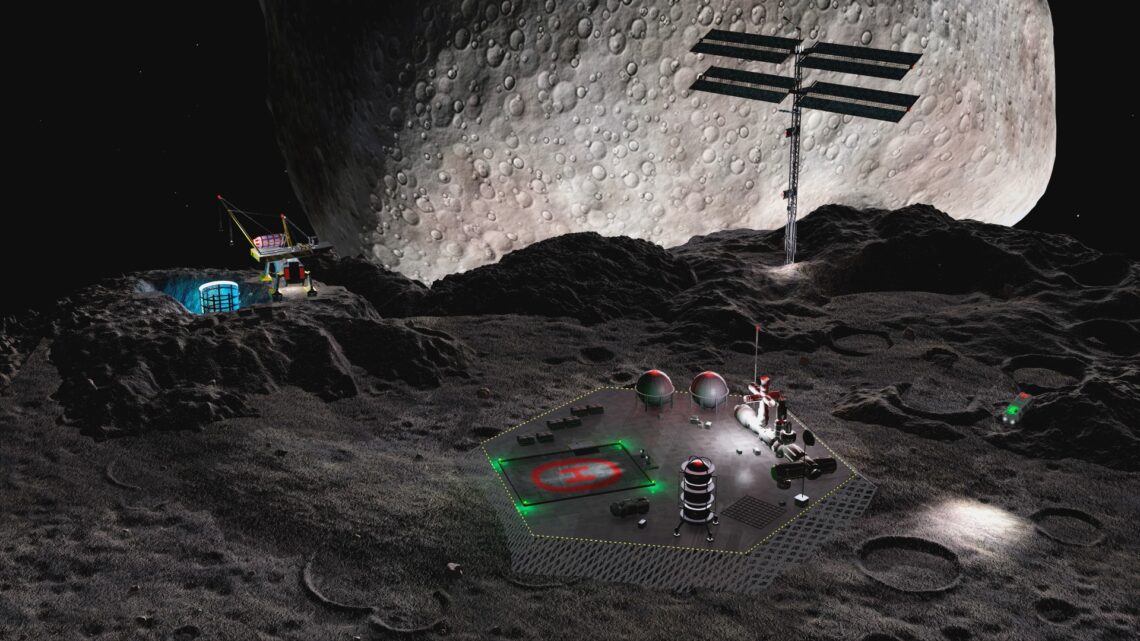
Future missions will rely on autonomous robotic spacecraft to identify, analyze, and extract materials from asteroids or lunar surfaces. These robots must be capable of operating in harsh environments, handling microgravity, and processing materials without human supervision.
2. In-Situ Resource Utilization (ISRU)
ISRU is a cornerstone of sustainable space exploration. It involves using local materials (like lunar regolith or asteroid metals) to produce fuel, oxygen, and building materials directly in space. This reduces the cost and risk of transporting supplies from Earth.
3. Advanced Propulsion Systems
Electric and ion propulsion systems, now being developed by NASA and private companies, allow for low-cost and efficient travel to and from asteroids. These systems make it feasible to reach multiple targets within the asteroid belt in a single mission.
4. 3D Printing and On-Site Manufacturing
With 3D printing, materials extracted from space could be turned into tools, components, or even spacecraft parts on-site. This could drastically reduce dependency on Earth-based manufacturing and enable self-sustaining space colonies.
Economic Potential and Market Impact
The economic implications of space mining are enormous. Analysts predict that the space resource industry could be worth over $1 trillion by 2040, as new markets emerge for raw materials, fuels, and construction components.
Reducing Resource Scarcity on Earth
As Earth’s natural resources become increasingly strained, space mining offers a sustainable alternative. Metals such as platinum, which are essential for catalytic converters and electronics, are rare on Earth but abundant in asteroids.
Mining these metals in space could stabilize prices and reduce the environmental destruction caused by terrestrial mining.
Fueling the Space Economy
Water ice from the Moon or asteroids can be converted into hydrogen fuel, creating “gas stations” in orbit. This would make interplanetary travel cheaper and enable a circular space economy, where materials mined off-Earth are used to build and sustain space infrastructure.
New Industries and Job Creation
As space mining grows, so too will related sectors — robotics, aerospace engineering, data analytics, and materials science. Countries investing early in this sector could see enormous economic and strategic benefits.
Impact on Commodity Markets
If large quantities of precious metals are introduced from space, global commodity prices could drop significantly. Economists warn of a potential “space resource shock”, requiring regulation and careful integration into global markets.
Key Players in Space Mining
Several governments and private enterprises are investing in space resource extraction.
1. NASA and International Agencies
NASA’s Artemis Program and the Lunar Gateway are laying the foundation for lunar exploration and resource utilization. The European Space Agency (ESA) and Japan’s JAXA are also developing technologies to harvest lunar ice and minerals.
2. Private Companies
- Asteroid Mining Ventures: Early startups like Planetary Resources and Deep Space Industries pioneered asteroid prospecting missions.
- Lunar Mining Projects: Companies such as ispace (Japan) and AstroForge are developing small spacecraft for commercial mining missions.
- SpaceX & Blue Origin: Though not directly mining, they provide the launch infrastructure and transport systems needed to support future mining operations.
These partnerships between governments and private firms are accelerating the race toward a commercial space resource economy.
Challenges and Risks
Despite its immense potential, space mining faces several significant hurdles.
Legal and Regulatory Ambiguity
The Outer Space Treaty of 1967 prohibits national ownership of celestial bodies, raising questions about the legality of private resource extraction. While the U.S. Space Resource Exploration and Utilization Act (2015) and similar laws in Luxembourg and the UAE grant rights to companies over mined materials, global consensus remains lacking.
A clear international framework is essential to prevent conflict and ensure equitable access to resources.
Technological and Financial Barriers
Space mining requires enormous upfront investment — from spacecraft development to launch costs and robotic systems. Despite falling launch prices, missions still cost hundreds of millions of dollars.
Environmental and Ethical Concerns
Mining celestial bodies could disrupt their natural states, raising concerns about planetary protection and cosmic environmental ethics. Scientists urge caution to avoid contaminating pristine celestial environments.
Economic Viability
Even if technically feasible, the profitability of space mining remains uncertain. The cost of extraction and transportation might outweigh potential returns unless technology improves and infrastructure expands.
Future of Space Mining
The next two decades will likely see exploratory missions evolve into commercial operations. NASA’s Psyche Mission (launched in 2023) will study a metal-rich asteroid, providing valuable data for future mining. Meanwhile, lunar resource missions under the Artemis program will test methods of extracting and processing lunar water ice.
By the 2030s, robotic miners could begin collecting and refining materials on the Moon, with automated transport systems delivering them to space stations or Earth orbit. The emergence of a space economy, powered by off-Earth resources, may fundamentally transform how humanity interacts with the cosmos.
In the long run, space mining could not only solve Earth’s resource challenges but also enable human colonization of the Moon, Mars, and beyond. With access to metals, fuel, and water, humans could build sustainable outposts across the Solar System — turning science fiction into reality.
Conclusion
Space mining represents both a technological frontier and an economic revolution. The resources locked within asteroids and the Moon hold the potential to transform global industries, fuel interplanetary exploration, and build a truly sustainable space-based economy.