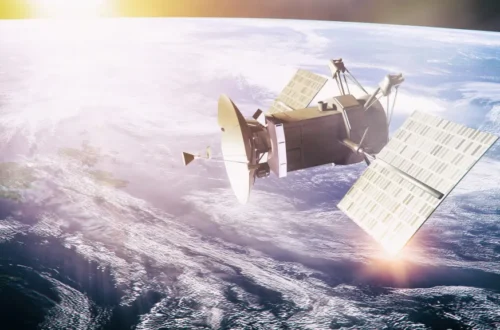
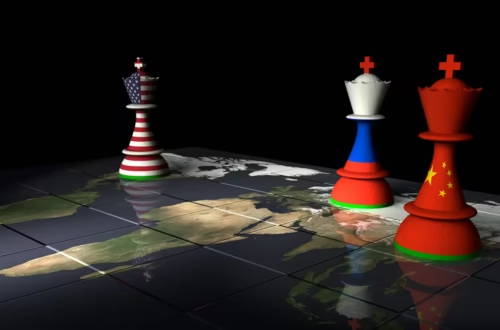
As humanity expands its presence into outer space, questions surrounding legality, ownership, and intellectual rights are becoming increasingly important. New industries—ranging from satellite communications to lunar mining and space manufacturing—are creating a complex intersection between traditional legal systems and an entirely new frontier. Space law, once concerned primarily with diplomatic relations and scientific exploration, has evolved into a wide-ranging discipline addressing everything from commercial activity to intellectual property (IP) created beyond Earth. As space becomes more accessible to governments, private companies, and even individuals, understanding how legal frameworks operate is essential for ensuring fairness, innovation, and peaceful use of the cosmos.
Foundations of Space Law
Modern space law is built upon several key international agreements known collectively as the United Nations Outer Space Treaties. These foundational treaties include:
1. The Outer Space Treaty (1967)
Often considered the “constitution” of space law, it outlines major principles:
- Space is the province of all mankind, and no nation can claim sovereignty over the Moon, planets, or other celestial bodies.
- Space activities must be conducted peacefully.
- Nations bear responsibility for the actions of both governmental and private entities.
- Countries are liable for damage caused by their space objects.
2. The Rescue Agreement (1968)
States must assist astronauts in distress and return them safely to their launching country.
3. The Liability Convention (1972)
Defines liability for damage caused on Earth or in space by spacecraft or satellites.
4. The Registration Convention (1975)
Requires nations to register objects launched into space.
5. The Moon Agreement (1979)
Declares the Moon the common heritage of humankind, but few major nations have signed it.
These treaties were designed during the Cold War, before private companies like SpaceX or Blue Origin existed. As a result, they leave many gaps regarding modern commercial space activity and intellectual property rights.
The Rise of Commercial Space Activities
The emergence of private industry in space has raised entirely new legal challenges. Companies now launch rockets, operate satellite constellations, plan missions to the Moon, and develop technologies in orbit. This rapid commercialization is pushing space law into areas not envisioned in the 1960s.
Key issues include:
- Who owns resources extracted from the Moon or asteroids?
- Can companies patent inventions created in space?
- Who is responsible for liability when private companies operate across national borders?
- How do nations regulate private-sector operations without violating international treaties?
To address these concerns, some countries have passed national legislation. The U.S. Commercial Space Launch Competitiveness Act (2015) grants American companies the right to own resources they mine in space, while Luxembourg, Japan, and the United Arab Emirates have enacted similar laws. These laws do not claim sovereignty over space, but they assert that extracted resources can be legally owned—similar to fishing in international waters.
Intellectual Property Rights Beyond Earth
As scientific research and manufacturing move into orbit, intellectual property rights (IPR) have become crucial. Satellites, space stations, and future lunar bases will generate new inventions and technologies, raising questions about ownership, jurisdiction, and protection.
IP on the International Space Station (ISS)
The ISS is governed by the Intergovernmental Agreement (IGA), which treats each module as part of the territory of its sponsoring nation. For example:
- The U.S. Destiny module is under U.S. jurisdiction.
- The Japanese Kibo module follows Japan’s laws.
- The European Columbus module is governed by ESA member-states.
This means that IP created in a specific module is subject to the laws of that module’s country.
Under this system:
- A scientist who invents something in the Kibo module must follow Japanese patent law.
- An invention created in the U.S. segment is protected by American IP law.
This arrangement ensures that innovators receive IP protection despite operating in a multinational environment.
Challenges in Protecting IP in Outer Space
While some frameworks exist, several unique challenges complicate IP protection beyond Earth:
1. Jurisdictional Ambiguity
Outside the ISS, activities may occur in spacecraft controlled by private companies or in habitats built on the Moon or Mars. Determining which nation’s laws apply can be complex.
2. Enforcement Difficulties
Even if a patent is granted, enforcing it in space is extremely difficult. If another entity replicates a technology on the Moon, legal remedies may be limited.
3. Theft of Data and Space-Based AI Systems
With spacecraft generating vast amounts of data, preventing unauthorized access is a major concern. Space-based cybersecurity is becoming an important part of IP protection.
4. Inventions with Multiple Locations of Creation
Some products—such as pharmaceuticals or crystals grown in microgravity—may rely on Earth-based and space-based processes. Determining the exact location of “invention” can complicate patent claims.
5. Space Manufacturing and 3D Printing
Future space factories may produce parts or materials in orbit. The question arises: who owns the IP of items manufactured using data uploaded from Earth?
Resource Extraction and Property Rights
As companies begin to explore asteroid mining and lunar resource extraction, IP becomes closely linked to property rights.
Can anyone own a piece of the Moon?
International law says no. No nation can claim territory on celestial bodies.
Can companies own extracted resources?
Many countries say yes.
However, this remains controversial because:
- Some nations view it as a violation of the spirit of the Outer Space Treaty.
- Others worry it could trigger a race for space resources.
A future legal framework will need to balance economic incentives with global fairness—much like how international agreements regulate oceans or Antarctica.
The Future of Space Law and IP Rights
As humanity moves toward the Moon, Mars, and beyond, space law must evolve. The next few decades will likely see new treaties that address:
1. IP Rights for Lunar and Martian Settlements
Future bases may have multiple nations and companies working side-by-side. Clear rules will be required to protect inventions and maintain collaboration.
2. Global Governance of Space Resources
A fair system must ensure that resource-rich asteroids are not monopolized by a few wealthy nations or corporations.
3. Regulation of AI and Automation in Space
AI-generated inventions and autonomous manufacturing in space raise new legal issues that current IP laws do not address.
4. Strengthened International Cooperation
Organizations like UNCOPUOS may need expanded authority to mediate disputes, update regulations, and coordinate global standards.
5. Space Traffic and Orbital Management
As space becomes crowded, legal frameworks must adapt to ensure safe operations, prevent collisions, and manage debris.
Conclusion
Space law and intellectual property rights are becoming increasingly essential as humanity enters a new era of exploration and commercialization. While existing treaties provide a foundational structure, they must evolve to address modern challenges such as private-sector activity, resource extraction, multinational operations, and inventions created off-Earth. Ensuring fair, enforceable, and innovative legal frameworks will allow nations and companies to operate responsibly while preserving space as a realm for peaceful exploration and shared advancement. The future of space depends not only on rockets and technology, but on laws that guide humanity toward cooperation, sustainability, and equitable opportunity beyond our planet.