Introduction
Humanity has always been driven by exploration — from crossing oceans to climbing mountains, and now, reaching for the stars. As the 21st century unfolds, space is no longer a distant frontier reserved for astronauts and scientists; it is rapidly becoming the next realm of human development and settlement.
The concept of space infrastructure and civilization refers to the creation of systems, technologies, and communities that will allow human life, commerce, and governance to exist beyond Earth. From satellites and orbital stations to lunar bases and Mars colonies, the building blocks of a spacefaring civilization are already being laid.
This article explores the evolution of space infrastructure, the challenges of sustaining life beyond Earth, and the vision of a multi-planetary civilization.
Foundations of Space Infrastructure
Space infrastructure encompasses all the systems that enable humans to operate and live in space. These include launch facilities, communication satellites, orbital platforms, transportation systems, and resource extraction technologies.
1. Launch and Transportation Systems
At the core of any space infrastructure lies the ability to reach space efficiently and reliably. The early days of space travel were dominated by government programs, but private companies have revolutionized the sector.
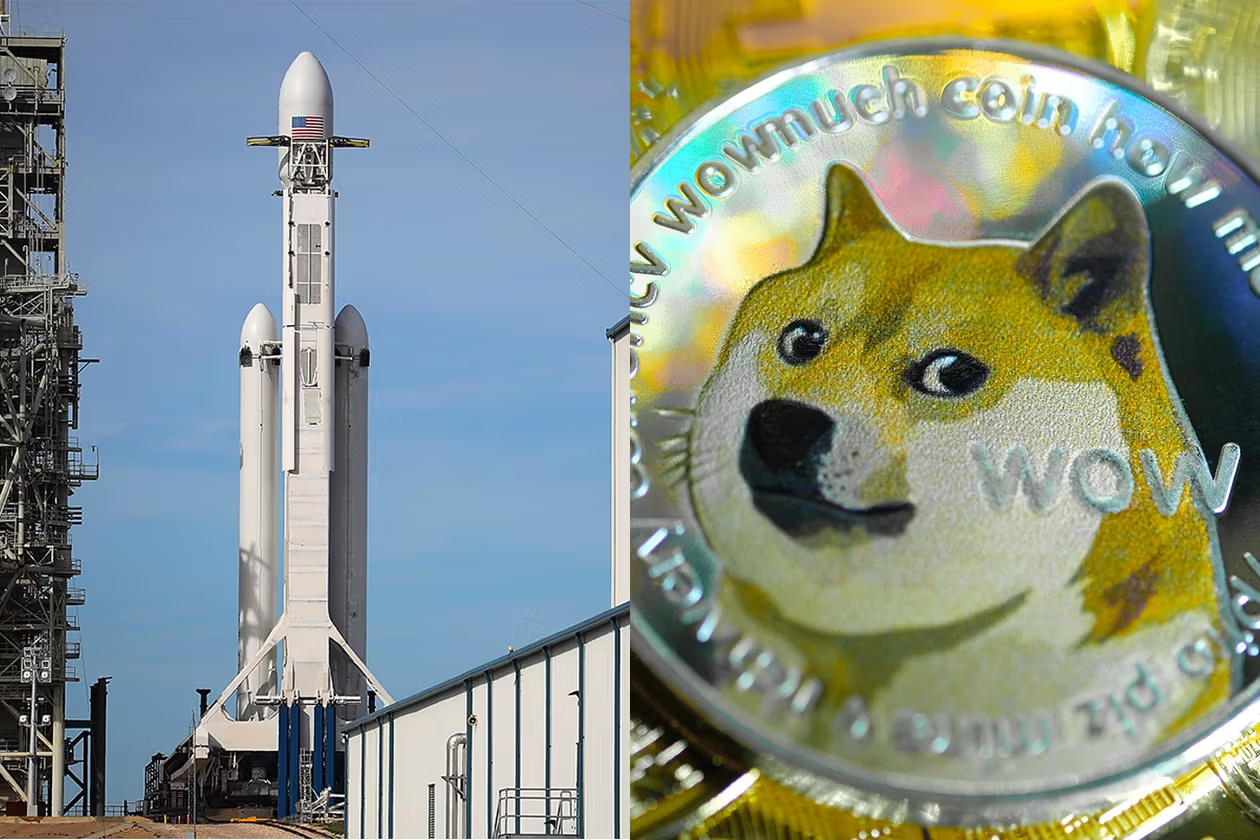
- SpaceX has developed reusable rockets like Falcon 9 and Starship, significantly reducing launch costs.
- Blue Origin and Rocket Lab are pioneering commercial launch systems for both cargo and crew.
- India’s ISRO and China’s CNSA have also developed cost-effective launch programs, expanding global access to space.
These advancements mark a new era where regular transport to orbit, the Moon, and Mars becomes a practical reality.
2. Orbital Infrastructure
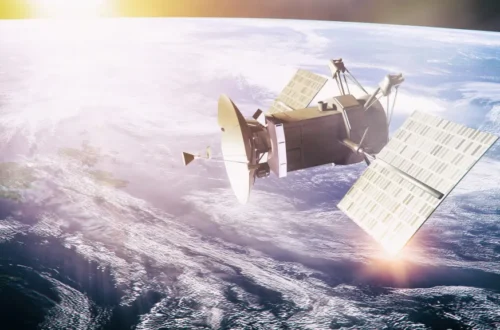
Thousands of satellites now form the backbone of modern civilization. They enable communication, navigation, weather forecasting, defense, and commerce.
In low Earth orbit (LEO), companies are building vast constellations such as Starlink and OneWeb to provide global internet coverage. Above them, geostationary satellites maintain essential services that keep economies connected.
Beyond individual satellites, the International Space Station (ISS) stands as a symbol of international collaboration and a model for future orbital infrastructure. The ISS has hosted over 250 astronauts from 20 countries, providing critical experience in living and working in microgravity.
The Next Step: Building Beyond Earth
1. Lunar Bases and the Gateway
The Moon is humanity’s next great construction site. Under NASA’s Artemis Program, astronauts will return to the lunar surface for the first time in over 50 years. The mission aims not just for exploration but for establishing a permanent lunar base that can serve as a hub for science, mining, and deep-space missions.
A key component of this plan is the Lunar Gateway, a small space station in lunar orbit. It will serve as a command center, refueling station, and transfer point between Earth and the Moon. The experience gained here will prepare humanity for even greater challenges — such as settling Mars.
2. Mars Colonization
Mars represents the most ambitious step toward creating a true spacefaring civilization. The planet’s gravity, atmosphere, and day length make it the most Earth-like destination for human settlement.
Companies like SpaceX envision fleets of Starships transporting materials and settlers to build self-sustaining colonies. Scientists propose using 3D-printed habitats made from Martian soil, powered by solar energy and supported by closed-loop life support systems.
The colonization of Mars would require infrastructure for:
- Energy production (solar, nuclear, or geothermal)
- Food growth using hydroponics or bioreactors
- Resource extraction (mining ice for water and fuel)
- Radiation protection (underground shelters or regolith shielding)
If successful, Mars could become humanity’s second home — and a blueprint for future expansion across the solar system.
Supporting Systems for a Space Civilization
1. Communication Networks
Space communication infrastructure will be the nervous system of an interplanetary civilization. Laser-based communication systems are being developed to transmit data faster and more reliably across vast distances.
NASA’s Deep Space Network (DSN) already allows communication with spacecraft billions of kilometers away, but future colonies will require interplanetary internet systems capable of high-speed, low-latency transmission.
Energy Systems
Reliable energy is the lifeblood of space operations. Solar power remains the primary source, but in shadowed regions or on distant planets, nuclear power offers a stable alternative.
NASA’s Kilopower Project is developing small nuclear reactors that could provide electricity for lunar or Martian habitats. On a larger scale, the concept of space-based solar power (SBSP) — collecting solar energy in orbit and beaming it to Earth — could revolutionize global energy production.
Space Manufacturing and Resource Utilization
Transporting materials from Earth is expensive, so long-term space infrastructure depends on in-situ resource utilization (ISRU) — using local materials to build and sustain operations.
Robots can extract oxygen from lunar regolith or produce metals for construction. Asteroids contain vast amounts of rare minerals such as platinum, nickel, and cobalt. Developing space mining technologies could supply both space and Earth industries, creating a self-sustaining space economy.
Artificial Gravity and Habitats
Microgravity poses serious health risks for long-term human habitation. Engineers are exploring ways to create artificial gravity through rotating habitats or centrifuge modules.
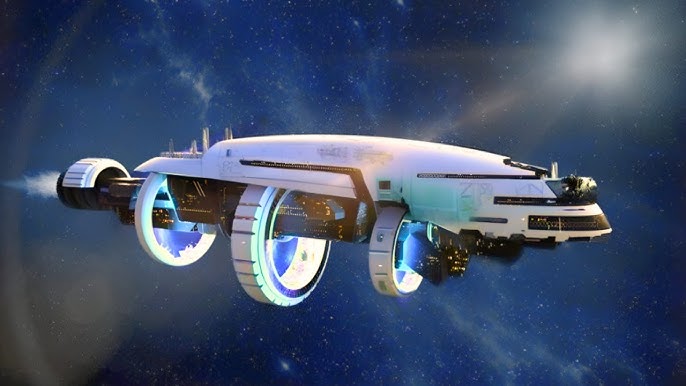
Future space stations or colonies may resemble the designs of O’Neill cylinders or Stanford tori — massive rotating structures capable of simulating Earth-like gravity, supporting thousands of inhabitants, and even ecosystems.
Governance and Social Structure
A sustainable space civilization requires more than technology — it needs law, governance, and culture.
As human presence expands, questions about ownership, citizenship, justice, and economy in space will become central. International agreements like the Outer Space Treaty (1967) prohibit national ownership of celestial bodies, but new frameworks are needed to govern private enterprises and interplanetary communities.
Socially, space settlements will need to balance individual freedom with collective responsibility. Education, healthcare, and cultural development will play crucial roles in shaping cohesive and ethical societies beyond Earth.
Challenges to Building a Space Civilization
While progress is rapid, several obstacles stand in the way of a thriving space civilization:
- High Costs: Even with reusable rockets, launching heavy payloads remains expensive.
- Radiation Exposure: Space environments expose humans to dangerous cosmic rays.
- Isolation and Psychology: Long missions can lead to mental stress and social challenges.
- Space Debris: The growing number of satellites and debris poses risks to infrastructure.
- International Competition: Political tensions could hinder cooperation and sustainability.
Solving these challenges will require innovation, diplomacy, and a commitment to peaceful development.
Humanity as a Multi-Planetary Civilization
The construction of space infrastructure is more than a technical achievement — it is a philosophical and cultural transformation. It marks humanity’s evolution from a planet-bound species to a multi-planetary civilization.
In the future, cities on Mars may trade resources with orbital stations; lunar factories may build spacecraft for journeys to the outer planets. The same technologies that enable off-world living could also help preserve Earth by driving cleaner energy, better resource management, and global cooperation.
The stars are not just a destination but a mirror — reflecting our ingenuity, resilience, and unity as a species.
Conclusion
Space infrastructure and civilization represent the next great leap in human history. What began with a single satellite now expands toward a vision of thriving human communities across the solar system.
Building this future will demand collaboration between science, engineering, governance, and imagination. The challenge is immense — but so is the reward.
As we construct the highways, homes, and habitats of the cosmos, we are not merely escaping Earth; we are extending humanity’s story — carrying our knowledge, culture, and hopes into the infinite expanse of space.
The dream of living among the stars is no longer a fantasy. It is the destiny of a civilization ready to grow beyond its cradle and embrace the universe as its new home