Introduction
Since the dawn of civilization, humanity has gazed at the night sky with awe and curiosity. The stars have inspired our myths, guided our journeys, and challenged our understanding of existence. Yet, it was only in the 20th century that we transformed that curiosity into reality — by sending machines and humans beyond Earth’s atmosphere.
Space exploration represents one of the greatest achievements in human history — a union of science, technology, and imagination. It has allowed us to understand our planet better, uncover the secrets of the cosmos, and dream of new worlds where future generations might one day live.
This article explores the evolution, milestones, challenges, and future of space exploration and missions — from early dreams of flight to the modern era of interplanetary ambition.
Dawn of Space Exploration
The Space Race: A New Frontier
The story of modern space exploration began during the Cold War. In 1957, the Soviet Union launched Sputnik 1, the first artificial satellite, marking the beginning of the Space Age. For the first time, humanity had placed a man-made object in orbit — a signal that our species had crossed a historic threshold.
Just four years later, in 1961, Soviet cosmonaut Yuri Gagarin became the first human to orbit Earth aboard Vostok 1. The United States responded with the Apollo Program, which culminated in Apollo 11 — the legendary mission that landed Neil Armstrong and Buzz Aldrin on the Moon in July 1969. Armstrong’s words, “That’s one small step for man, one giant leap for mankind,” became a timeless symbol of human achievement.
The space race was fueled by political rivalry, but its impact extended beyond national pride. It laid the foundation for scientific discovery, innovation, and international cooperation in space exploration.
The Expansion of Space Missions
From Satellites to Deep Space Probes
After the initial rush of human spaceflight, exploration expanded to include robotic and scientific missions. Satellites revolutionized communication, weather forecasting, and navigation — forming the technological backbone of modern life.
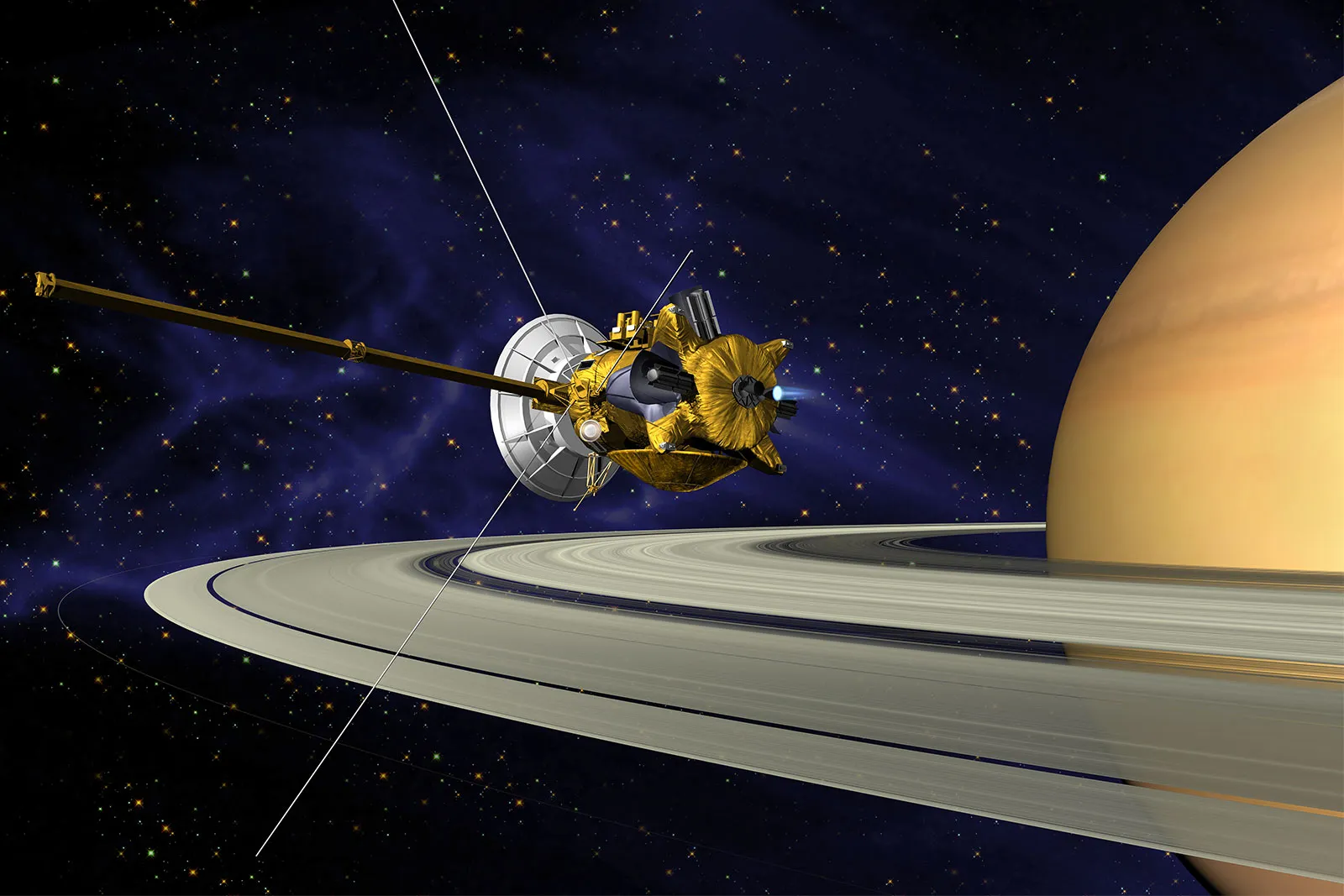
At the same time, unmanned probes began venturing into the solar system. The Mariner, Pioneer, Voyager, and Cassini missions provided stunning images and data about planets, moons, and asteroids.
- Voyager 1, launched in 1977, remains one of humanity’s most extraordinary achievements. It is now more than 24 billion kilometers from Earth — the farthest human-made object — carrying the Golden Record, a time capsule of Earth’s sounds and images for any future civilization that may find it.
The Rise of Space Telescopes
In 1990, NASA launched the Hubble Space Telescope, which transformed astronomy. Orbiting above Earth’s atmosphere, Hubble revealed galaxies billions of light-years away, helped measure the expansion of the universe, and deepened our understanding of cosmic history.
Today, the James Webb Space Telescope (JWST) continues that legacy, peering further into time and space to study the origins of galaxies, stars, and planets.
Human Spaceflight: Beyond Low Earth Orbit
The International Space Station (ISS)
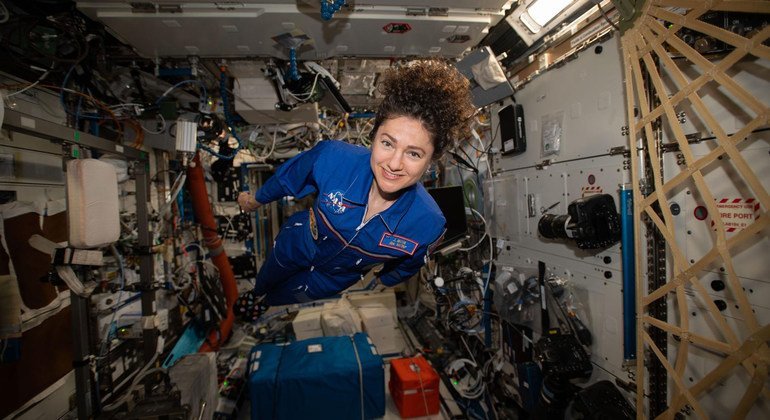
Launched in 1998, the International Space Station stands as one of humanity’s greatest collaborative projects. Built and operated by NASA, Roscosmos, ESA, JAXA, and CSA, the ISS serves as a microgravity laboratory and a home for astronauts from around the world.
It has enabled groundbreaking research in biology, medicine, physics, and materials science — helping scientists understand how humans adapt to long-duration spaceflight.
The ISS also symbolizes global cooperation in space — proving that nations can work together peacefully, even in politically divided times.
The Artemis Program: Returning to the Moon
NASA’s Artemis Program, in partnership with the European and Japanese space agencies, aims to return humans to the Moon by the mid-2020s — this time to stay.
The program’s goals include:
- Establishing a sustainable lunar base for scientific research.
- Developing technology for Mars missions.
- Landing the first woman and first person of color on the lunar surface.
Artemis marks the next chapter in human exploration — one focused not just on visiting other worlds but living and working there sustainably.
Robotic Exploration: Eyes and Hands Across the Solar System
Mars: Humanity’s Next Home
Mars has always captured the imagination of scientists and dreamers alike. It is the most studied planet after Earth — and the prime candidate for future colonization.
NASA’s Perseverance Rover, along with China’s Zhurong and Europe’s upcoming ExoMars mission, are investigating Mars’ geology and searching for signs of ancient microbial life.
Perseverance even carries the Ingenuity helicopter, the first aircraft to fly on another planet — a stunning example of innovation in space exploration.
Exploring the Outer Worlds
While Mars draws most attention, missions to the outer planets are equally groundbreaking.
- Juno explores Jupiter’s magnetic field and atmosphere.
- Cassini-Huygens studied Saturn and its moons, revealing the potential habitability of Enceladus.
- NASA’s upcoming Europa Clipper will investigate whether Jupiter’s icy moon, Europa, harbors a subsurface ocean capable of supporting life.
Each mission extends the boundaries of human knowledge — showing us that even in the coldest, most distant worlds, the ingredients for life might exist.
The Role of Private Industry
In recent decades, space exploration has evolved from government-dominated projects to a collaboration between public and private sectors.
Companies such as SpaceX, Blue Origin, Rocket Lab, and Virgin Galactic are revolutionizing access to space.
- SpaceX’s Falcon 9 and Starship rockets use reusability to drastically reduce launch costs.
- Blue Origin focuses on suborbital tourism and lunar landers.
- Private missions are already sending astronauts, satellites, and scientific equipment into orbit.
This new era — often called “NewSpace” — is democratizing space access and accelerating innovation. The future of space exploration will likely be shaped by partnerships between governments, universities, and private enterprises.
Scientific and Ethical Challenges
Space exploration is not without its challenges — both technical and moral.
Technological Barriers
- Radiation exposure remains a serious threat for astronauts on long missions.
- Life-support systems must be sustainable for years without resupply.
- Propulsion technology must advance to enable faster and safer deep-space travel.
Ethical and Environmental Concerns
- Space debris in Earth’s orbit threatens satellites and spacecraft.
- Planetary protection policies aim to prevent biological contamination of other worlds.
- As we expand outward, humanity must ensure that exploration remains responsible and sustainable.
Future of Space Exploration
The future promises even greater adventures:
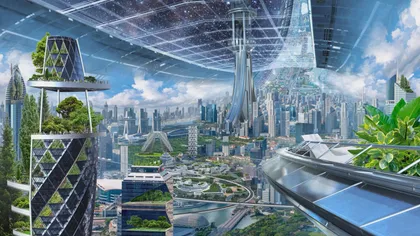
- Lunar bases for research and mining.
- Mars colonies powered by renewable energy and AI.
- Asteroid mining for rare resources.
- Interstellar missions that reach neighboring star systems like Proxima Centauri.
Artificial intelligence, robotics, and biotechnology will play key roles in enabling humans to survive in hostile environments and adapt to life beyond Earth.
Moreover, exploration is not just about survival — it’s about curiosity, creativity, and progress. Every mission, from the smallest satellite to the largest space station, is a step toward a broader human destiny among the stars.
Conclusion
Space exploration and missions embody the spirit of human discovery — our unending desire to understand the universe and our place within it.
From the first satellite to deep space probes, from Moon landings to Mars rovers, each step has brought us closer to becoming a multi-planetary species.
Yet, space exploration is more than a scientific pursuit — it’s a mirror of our collective imagination and cooperation. It reminds us that the challenges we face on Earth — climate change, inequality, conflict — can also be overcome when humanity works together toward a shared dream.
As we look to the future, the message of space exploration is clear:
Our destiny is not confined to one world.