Introduction
For centuries, humanity has looked to the stars with wonder — from the philosophers of ancient Greece to the scientists of the Renaissance. Yet, only in the past few decades has the dream of living beyond Earth evolved from imagination to scientific possibility.
The idea of space colonization — establishing permanent human settlements on other celestial bodies — represents one of the most ambitious and transformative endeavors in history. It challenges not only our technological limits but also our understanding of survival, ethics, economics, and identity.
As space agencies and private companies plan missions to the Moon, Mars, and beyond, a new era is emerging: the era of interplanetary civilization.
This article explores the vision, science, challenges, and implications of long-term human settlement in space — and what it means for the future of humanity.
Vision of Space Colonization
Space colonization refers to the establishment of human communities outside Earth that are self-sustaining and capable of long-term survival.
The concept dates back to the mid-20th century, inspired by thinkers like Konstantin Tsiolkovsky, who famously said, “Earth is the cradle of humanity, but one cannot live in the cradle forever.”
Early Concepts and Science Fiction
Science fiction popularized the dream — from Arthur C. Clarke’s orbital habitats to Isaac Asimov’s galactic empires. But fiction gradually inspired fact. The Apollo missions proved humans could live and work beyond Earth, even if briefly.
Today, the vision has shifted from exploration to permanent habitation — with goals such as:
- Establishing Moon bases for research and resource extraction.
- Creating Mars settlements to serve as stepping stones for deeper space travel.
- Building orbital habitats that simulate Earth-like environments.
The ultimate objective: to make humanity a multi-planetary species.
Colonize Space?
The motivations for space colonization extend far beyond curiosity. They encompass survival, science, economics, and philosophy.
1. Human Survival and Species Continuity
Earth faces growing challenges — climate change, pandemics, resource depletion, and even potential asteroid impacts.
Space colonization offers a backup for civilization, ensuring humanity’s survival beyond a single planet.
Scientific Advancement
Permanent settlements on the Moon or Mars would enable continuous research on planetary formation, life origins, and human adaptation in space.
Economic Opportunities
Mining asteroids for rare metals, harvesting solar energy in orbit, and producing new materials in microgravity could fuel a space-based economy worth trillions.
Human Expansion and Exploration
Exploration is part of human nature. Colonizing other worlds fulfills our innate desire to push boundaries and expand the frontiers of knowledge.
Potential Locations for Colonization
The Moon
As the closest celestial body, the Moon serves as a natural first step.
- Its proximity allows for regular transport and communication.
- Water ice discovered at the poles could be converted into oxygen and rocket fuel.
- Lunar regolith can be used for 3D printing habitats and shielding from radiation.
Agencies like NASA’s Artemis Program and China’s Chang’e missions aim to establish permanent lunar bases within the next decade.
Mars
Mars is often called the most Earth-like planet. It has a day length similar to Earth’s, seasonal cycles, and potential subsurface water.
However, its atmosphere is thin and toxic, and surface radiation levels are high.
Companies like SpaceX envision self-sustaining cities on Mars by the 2050s, starting with robotic missions and small human crews.
Orbital Habitats
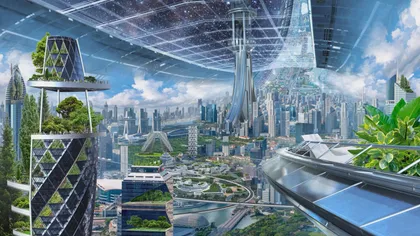
Instead of planets, some scientists advocate building space stations or rotating habitats — like O’Neill Cylinders — that create artificial gravity and house thousands of people.
Such habitats could orbit Earth, the Moon, or even the Sun, offering flexibility and safety.
Asteroids and Moons of Other Planets
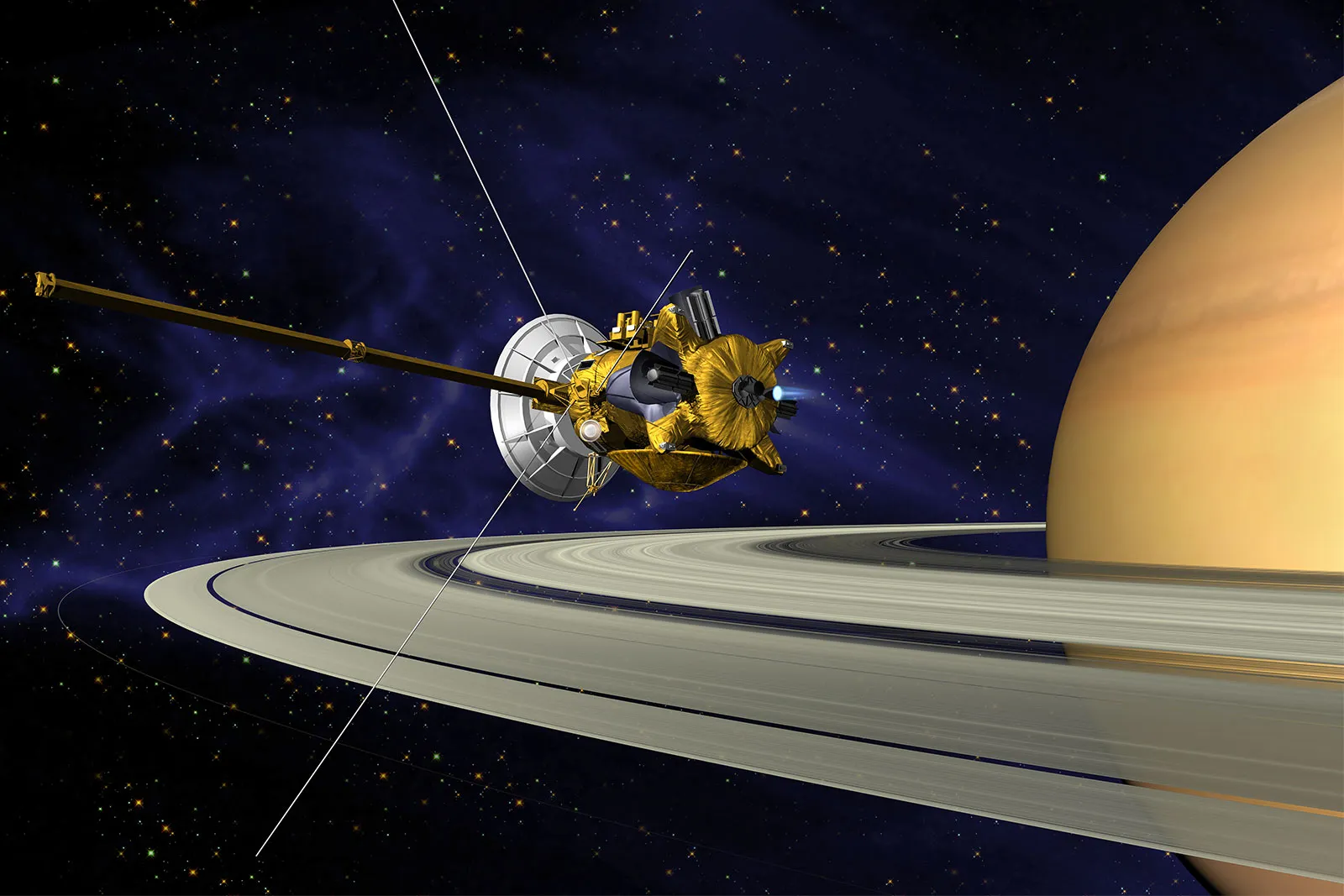
Farther into the future, colonies could exist on asteroids or moons like Europa (Jupiter) and Titan (Saturn), using local resources for energy and construction.
Scientific and Technological Challenges
Space colonization demands unprecedented innovation. The obstacles are immense, but so is human ingenuity.
Life Support and Sustainability
Settlers will need systems that recycle air, water, and waste indefinitely. Technologies such as closed-loop life support, hydroponic farming, and microbial recycling will be critical.
Radiation Protection
Space exposes humans to high levels of cosmic radiation, increasing cancer risks. Colonies must be shielded using underground habitats, thick regolith layers, or magnetic fields.
Microgravity and Health
Long-term exposure to low gravity causes muscle loss, bone deterioration, and cardiovascular issues. Artificial gravity through rotating habitats or exercise regimens will be essential.
Energy Generation
Solar energy will power most colonies, but on distant worlds or during long nights (like the 14-day lunar night), nuclear reactors or advanced batteries may be required.
Communication Delays
As distance increases, communication lag becomes a major issue — up to 22 minutes between Earth and Mars. Future colonies will need autonomous AI systems for decision-making.
Psychological and Social Factors
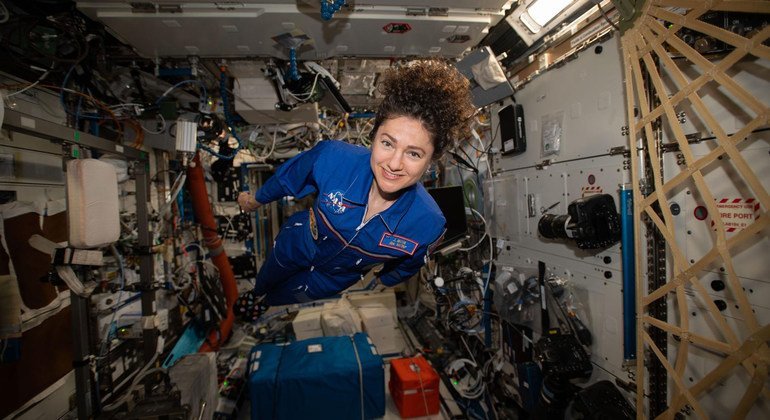
Isolation, confinement, and distance from Earth can take a psychological toll. Training, community design, and mental health support will be vital for long-term well-being.
Building a Space Society
Governance and Law
Space colonization raises questions about ownership, governance, and rights.
Who will own Martian land? What laws apply in orbit? The Outer Space Treaty (1967) prohibits national sovereignty claims but leaves room for interpretation in commercial ventures.
Future colonies may require new legal systems, possibly blending international law with self-governance — similar to maritime law.
2. Economy and Trade
A functioning colony must produce value to sustain itself. Possible exports include:
- Rare metals and isotopes from mining.
- Data and scientific discoveries.
- Manufactured goods created in microgravity environments.
Culture and Identity
Long-term space settlers may eventually form unique cultures — shaped by isolation, new challenges, and evolving traditions.
Over generations, humans might adapt biologically and socially to new environments, creating truly space-born societies.
Ethical and Philosophical Considerations
Space colonization is not merely a technical challenge; it is an ethical and philosophical one.
Planetary Protection
We must avoid contaminating other worlds with Earth microbes — and protect Earth from extraterrestrial contamination.
Equity and Access
Will space colonies be open to all nations or dominated by wealthy corporations? Ensuring inclusive access is vital for fairness.
Terraforming and Environmental Ethics
Altering planets like Mars to suit human life raises moral questions. Do we have the right to modify another world’s ecosystem, even if lifeless?
Human Evolution and Identity
As humans adapt to space, both physically and culturally, will we still be the same species?
Space colonization could redefine what it means to be “human.”
Role of Governments and Private Industry
Space colonization requires collaboration between governments, private companies, and international organizations.
- NASA, ESA, Roscosmos, CNSA, and ISRO lead foundational research.
- Private firms like SpaceX, Blue Origin, and Axiom Space are pioneering transport, habitats, and logistics.
- International partnerships will be essential to share costs, technology, and governance.
Without cooperation, space colonization risks becoming a competitive race rather than a shared human achievement.
Term Vision: Becoming a Multi-Planetary Civilization
In the long view, colonization is not the end goal — it’s the beginning of a new phase of civilization.
A thriving interplanetary society would:
- Harness energy from the Sun using space-based solar arrays.
- Expand to asteroid belts and outer moons, establishing research and resource hubs.
- Develop interstellar travel technologies powered by fusion or antimatter.
Over millennia, humanity could spread across star systems, carrying with it the legacy of Earth — our cultures, knowledge, and values.