Introduction
From the first spark of curiosity that led humanity to gaze at the night sky to the launch of powerful rockets that carry us beyond Earth’s atmosphere, science, technology, and innovation have been the driving forces of space exploration. Each mission, from the launch of Sputnik in 1957 to the landing of Perseverance on Mars in 2021, represents a milestone in human ingenuity.
Space exploration is more than the pursuit of knowledge—it is a testament to our species’ creativity, persistence, and desire to push boundaries. The technologies developed for space have not only opened the doors to other worlds but have also revolutionized life on Earth through spin-off innovations in medicine, communication, materials, and computing.
This article explores how scientific discovery, technological advancement, and human innovation work together to shape the future of space exploration.
Understanding the Universe
At the heart of space exploration lies science—the quest to understand the cosmos, our origins, and our place within it. Scientists use a wide range of disciplines, from astrophysics and planetary science to biology and chemistry, to explore the mysteries of the universe.
Expanding Human Knowledge
Space science has allowed us to uncover the fundamental workings of the universe. Through telescopes and space observatories, astronomers study stars, galaxies, and black holes billions of light-years away. The Hubble Space Telescope provided breathtaking images that reshaped our understanding of cosmic evolution, while the James Webb Space Telescope (JWST) now peers even deeper, observing the earliest galaxies formed after the Big Bang.
Planetary science has revealed that our solar system is more dynamic and complex than once imagined. Missions like Juno to Jupiter, Cassini to Saturn, and New Horizons to Pluto have transformed planets from distant dots into worlds with rich histories and diverse environments.
The Search for Life
Perhaps the most compelling scientific question driving exploration is: Are we alone?
Rovers like Curiosity and Perseverance have been exploring Mars, searching for signs of past or present microbial life. The discovery of subsurface oceans on moons like Europa (of Jupiter) and Enceladus (of Saturn) has further fueled interest in astrobiology — the study of life in the universe.
Each discovery brings us closer to understanding the conditions that make planets habitable and may one day answer the ultimate question about life beyond Earth.
The Engine of Exploration
While science defines the why of space exploration, technology defines the how. The history of spaceflight is a history of technological innovation — in propulsion, navigation, robotics, communications, and materials engineering.
Rocketry and Propulsion
The foundation of modern space travel lies in rocket technology. From the early chemical rockets of the 1960s to today’s reusable launch vehicles, advancements in propulsion have made space more accessible and cost-effective.
Companies like SpaceX have revolutionized spaceflight by developing reusable rockets such as the Falcon 9 and Starship, dramatically reducing launch costs. Meanwhile, new technologies such as ion thrusters and solar-electric propulsion are enabling long-duration missions to distant planets with greater efficiency.
Robotics and Artificial Intelligence
Exploration of other worlds often relies on robotic technology, which acts as humanity’s eyes and hands in environments too dangerous for humans.
NASA’s Perseverance rover on Mars is a marvel of engineering—it navigates autonomously, analyzes rock samples, and even collects data for future human missions. Drones like Ingenuity, the first helicopter to fly on another planet, represent a leap forward in planetary exploration.
Artificial Intelligence (AI) is now integral to mission planning and data analysis. AI systems process massive amounts of information from telescopes, detect anomalies in spacecraft operations, and help design more efficient trajectories for interplanetary travel.
Space Telescopes and Instruments
Space-based instruments are among the most advanced technologies ever built. The JWST uses infrared sensors to look billions of years into the past, while the Chandra X-ray Observatory detects high-energy phenomena like supernovae and quasars. These tools allow scientists to study the universe across multiple wavelengths, offering insights impossible to achieve from Earth’s surface.
Innovation: Pushing Beyond the Possible
Innovation is the creative bridge between scientific ambition and technological reality. It transforms bold ideas into working systems that make exploration achievable.
Private Sector Innovation
In recent years, the rise of private companies has accelerated space innovation. Organizations like SpaceX, Blue Origin, Rocket Lab, and Virgin Galactic have brought entrepreneurial energy to the industry. They develop reusable rockets, space tourism programs, and satellite networks that expand human presence in space.
This commercial participation has sparked what many call the “New Space Age.” Unlike the Cold War era, where governments dominated, today’s space frontier is shaped by collaboration between public and private sectors.
Innovative Materials and Design
New materials like carbon composites, heat-resistant ceramics, and 3D-printed components have made spacecraft lighter, stronger, and more efficient. Innovations in miniaturization have also led to CubeSats — small, inexpensive satellites that can perform scientific experiments or provide communication services at a fraction of traditional costs.
Life Support and Habitability
As humans prepare for longer missions, innovation in life support systems, radiation shielding, and closed-loop recycling becomes critical. NASA and ESA are experimenting with bioregenerative life support, which uses plants and microbes to recycle air and water aboard spacecraft — a vital step toward sustainable living on the Moon or Mars.
Space Innovation on Earth
The benefits of space exploration extend far beyond space itself. Technologies developed for missions have improved countless aspects of life on Earth — a phenomenon known as space technology transfer.
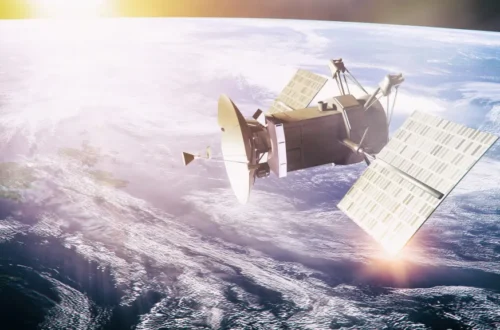
- Satellite Technology: Global communications, weather forecasting, and GPS navigation all rely on space-based systems.
- Medical Advancements: Imaging technologies, prosthetics, and even remote surgery systems were inspired by space innovations.
- Environmental Monitoring: Earth-observing satellites track deforestation, ocean temperatures, and greenhouse gas emissions, helping combat climate change.
- Materials Science: Innovations like scratch-resistant lenses, memory foam, and thermal insulation originated from space research.
Space exploration drives not only technological progress but also economic growth and global collaboration, inspiring generations of scientists and engineers.
Challenges and the Road Ahead.
Despite remarkable progress, the future of space exploration faces significant challenges.
- Cost and Funding: Space missions are expensive, and sustained investment is essential.
- Space Debris: The growing amount of debris in orbit threatens satellites and future missions.
- Ethical Questions: As we expand beyond Earth, questions about planetary protection and equitable access to resources become crucial.
- Human Health: Prolonged exposure to microgravity and radiation poses risks for astronauts on long missions.
Addressing these challenges requires international cooperation, creative problem-solving, and continued scientific research.
Toward a Spacefaring Civilization
Looking ahead, science, technology, and innovation will continue to shape humanity’s journey into the cosmos. Missions to Mars, asteroid mining, lunar bases, and deep space telescopes are already in development. Breakthroughs in quantum communication, nuclear propulsion, and artificial gravity may soon redefine what is possible.
The dream of a spacefaring civilization—where humans live and work across the solar system—is no longer fiction. It is a vision slowly materializing through the combined power of discovery, invention, and imagination.
Conclusion
Science provides the knowledge. Technology builds the tools. Innovation bridges the gap between imagination and achievement. Together, they form the triad that propels humanity toward the stars.
Every satellite launched, every rover that lands, and every telescope that peers into the cosmos reflects not only human intelligence but human hope. Space exploration is more than a scientific pursuit; it is an expression of our collective spirit to learn, adapt, and evolve.
As we stand on the edge of a new era — one where humanity becomes an interplanetary species — the partnership between science, technology, and innovation will continue to guide us toward the unknown, turning impossibility into achievement and dreams into destiny.