Introduction
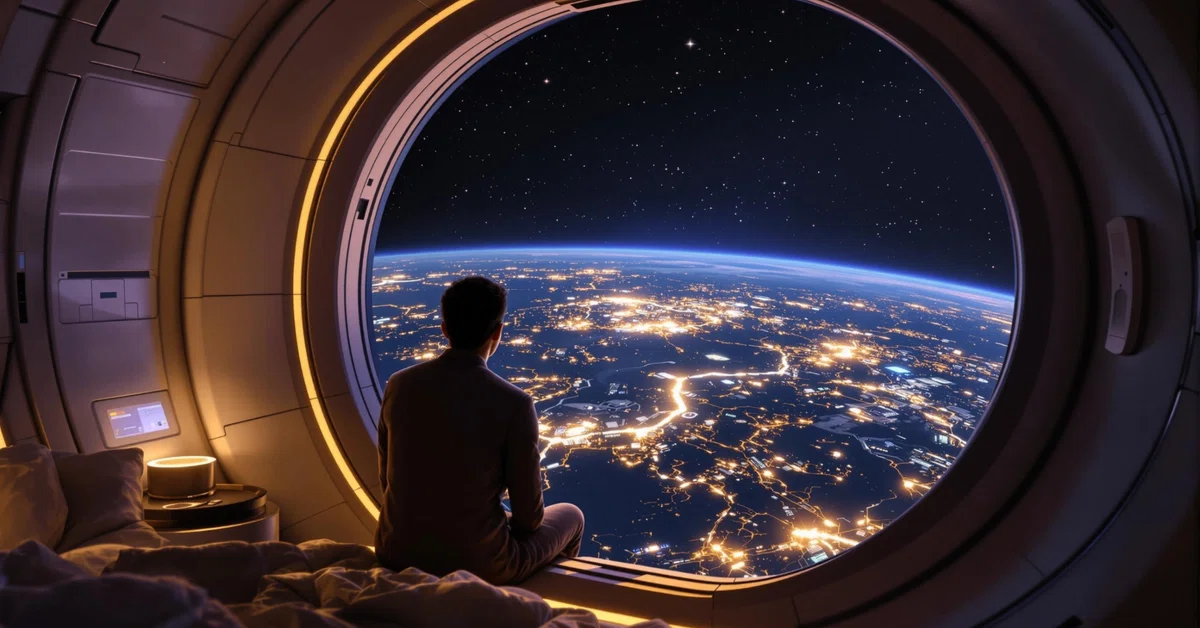
Humanity’s exploration of space has always been driven by curiosity — the desire to understand what lies beyond our planet. However, before humans can safely travel to distant worlds, robots must go first. From the first lunar landers to advanced AI-driven rovers on Mars, robotic exploration has revolutionized space science and expanded our reach into the cosmos.
Space probes and rovers have become the pioneers of interplanetary exploration, collecting data, testing technologies, and preparing the way for future human missions. Meanwhile, artificial intelligence (AI) is transforming how these machines operate — allowing them to navigate autonomously, analyze data in real time, and even make independent scientific decisions.
This article explores the evolution, significance, and future of robotic exploration — highlighting the key roles of rovers, probes, and AI in unlocking the mysteries of our universe.
Beginnings of Robotic Space Exploration
The story of robotic exploration began during the early space race between the United States and the Soviet Union. In the late 1950s and 1960s, both nations launched robotic spacecraft to study the Moon and nearby planets.
- The Soviet Luna missions achieved several firsts: the first spacecraft to reach the Moon (Luna 2, 1959), the first soft landing (Luna 9, 1966), and the first robotic rover, Lunokhod 1 (1970).
- NASA followed with the Mariner missions, which provided humanity’s first close-up views of Venus, Mars, and Mercury.
These early missions laid the foundation for all future robotic exploration, proving that unmanned spacecraft could operate successfully across vast distances and hostile environments.
Age of Space Probes
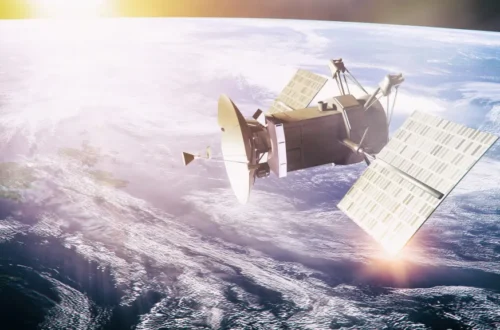
Space probes are uncrewed spacecraft designed to travel beyond Earth’s orbit and collect data about other celestial bodies. Over the decades, probes have transformed our understanding of the solar system.
Voyager Missions (1977–Present)
NASA’s Voyager 1 and Voyager 2 remain two of the most significant robotic missions in history. Launched in 1977, these probes conducted detailed flybys of Jupiter, Saturn, Uranus, and Neptune, sending back spectacular images and invaluable scientific data.
Voyager 1 became the first human-made object to enter interstellar space in 2012, continuing to transmit data more than 22 billion kilometers from Earth — a testament to the durability and ingenuity of robotic engineering.
Pioneer and New Horizons
Before Voyager, the Pioneer 10 and 11 missions provided the first direct observations of the outer planets. Decades later, New Horizons (2006) continued this legacy, making history in 2015 with the first-ever flyby of Pluto, revealing a world far more complex than scientists had imagined.
Cassini–Huygens and the Exploration of Saturn
The Cassini-Huygens mission (1997–2017), a collaboration between NASA, ESA, and ASI, revolutionized our knowledge of Saturn and its moons. Cassini orbited Saturn for 13 years, while the Huygens probe landed on Titan, Saturn’s largest moon — marking the first landing in the outer solar system.
These missions demonstrated how robotic spacecraft can work together across millions of kilometers to perform complex, multi-phase operations.
Mars: The Planet of Rovers
No other planet has hosted as many robotic explorers as Mars. The Red Planet has long fascinated scientists due to its similarity to Earth and its potential to harbor life. Rovers and landers have transformed our understanding of Martian geology, atmosphere, and habitability.
The Early Missions
NASA’s Viking 1 and 2 landers (1975) were the first successful missions to operate on Mars, analyzing soil samples for signs of life and taking the first panoramic images of the surface.
Spirit and Opportunity (2004–2018)
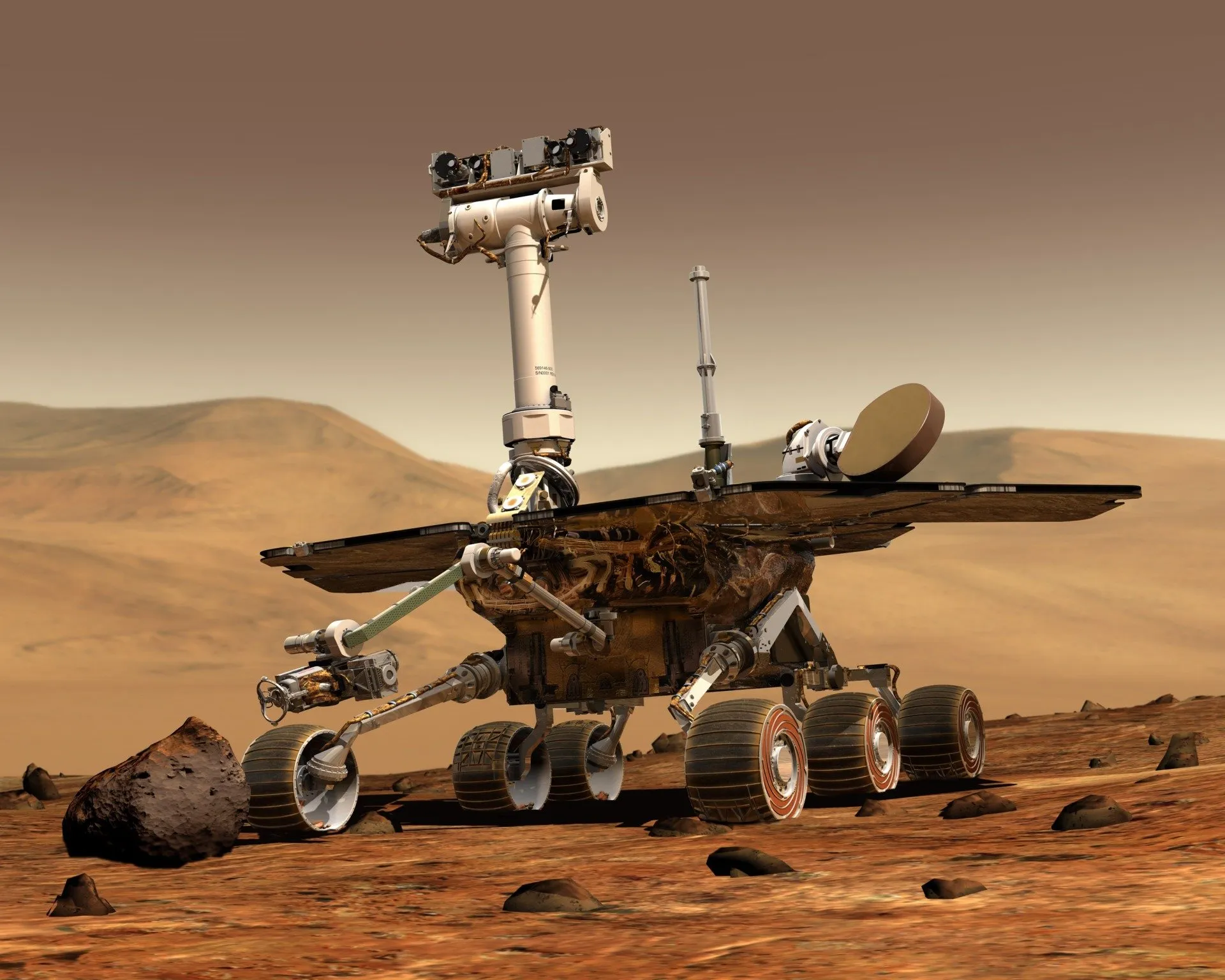
Launched in 2003, the twin rovers Spirit and Opportunity were designed to last 90 days but far exceeded expectations. Opportunity operated for over 14 years, traveling more than 45 kilometers across the Martian surface. They discovered evidence of ancient water — a critical finding for understanding Mars’ past habitability.
Curiosity Rover (2012–Present)
NASA’s Curiosity rover, part of the Mars Science Laboratory mission, represents a major leap in technology. It is equipped with advanced cameras, chemical analyzers, and even a laser spectrometer to study rocks and soil.
Curiosity confirmed that Mars once had the right conditions to support microbial life, including liquid water and essential chemical elements.
Perseverance and Ingenuity (2021–Present)
In 2021, NASA’s Perseverance rover landed on Mars with the goal of searching for signs of ancient life and collecting rock samples for a future return mission. Accompanying it was Ingenuity, the first helicopter ever to fly on another planet — a stunning example of engineering innovation.
Perseverance uses AI-based systems for autonomous navigation, allowing it to make decisions about where to drive and which rocks to study.
Role of Artificial Intelligence in Space Exploration
As missions travel farther from Earth, real-time human control becomes impossible due to long communication delays. Here, artificial intelligence (AI) and machine learning play a crucial role.
Autonomous Navigation
Modern rovers like Perseverance and Curiosity use AI to process images from onboard cameras and map safe paths through rocky terrain. This autonomy reduces reliance on Earth-based instructions and maximizes scientific efficiency.
Data Analysis and Prioritization
AI helps identify scientifically interesting targets by analyzing sensor data in real time. It can detect anomalies or potential discoveries — such as unusual rock formations or mineral compositions — and alert scientists for follow-up.
Spacecraft Health Monitoring
AI systems monitor spacecraft performance, detect malfunctions, and even make corrective actions to prevent mission failure. NASA’s Deep Space Network uses AI algorithms to optimize communication and data transmission between Earth and distant probes.
4. Future Applications
In the future, AI could allow fully autonomous missions capable of exploring distant moons and asteroids with minimal human oversight. Intelligent systems may even assist astronauts on the Moon and Mars, providing real-time decision support and robotic assistance.
Beyond Mars: Probes and Landers Across the Solar System
Robotic exploration is not limited to Mars — it spans nearly every corner of our solar system.
- Juno (2016–Present): Currently orbiting Jupiter, studying its atmosphere, magnetosphere, and massive storms like the Great Red Spot.
- OSIRIS-REx (2016–2023): Collected samples from the asteroid Bennu and successfully returned them to Earth in 2023.
- Hayabusa 1 & 2 (Japan): Brought back samples from asteroids Itokawa and Ryugu, demonstrating Japan’s leadership in robotic sample-return missions.
- Rosetta and Philae (ESA): Made the first landing on a comet in 2014, providing insights into the early solar system.
Each mission showcases the adaptability of robotic technology in exploring environments that would be too dangerous or distant for humans.
Challenges and Limitations
Despite incredible success, robotic exploration faces several challenges:
- Harsh Environments: Extreme temperatures, radiation, and dust storms can damage delicate instruments.
- Communication Delays: Signals can take minutes or hours to travel between Earth and distant probes.
- Power Limitations: Solar energy is weak in the outer solar system, forcing missions to rely on nuclear power sources.
- Autonomy vs. Control: Balancing autonomous AI systems with human oversight remains a complex issue.
Overcoming these challenges requires continuous innovation in AI, robotics, and energy systems.
Future of Robotic Exploration.
The future of space exploration will be increasingly robotic and intelligent.
- NASA’s Europa Clipper (2025) will investigate Jupiter’s moon Europa, searching for subsurface oceans that might harbor life.
- The Dragonfly mission (2028) will send a rotorcraft to Saturn’s moon Titan, exploring its methane lakes and organic chemistry.
- AI-powered swarms of small robots could one day explore asteroids or icy moons collectively, sharing data and coordinating actions like a digital hive.
Eventually, robotic explorers and human astronauts will work side by side, with robots serving as scouts, builders, and assistants in establishing bases on the Moon and Mars.
Conclusion
From the first lunar rovers to the AI-driven explorers of today, robotic exploration has redefined what is possible in space science. Probes like Voyager and New Horizons have carried human curiosity to the edges of the solar system, while rovers like Perseverance and Curiosity have turned Mars into a world we now intimately know.
Artificial intelligence represents the next great leap — enabling spacecraft to think, decide, and explore independently. Together, rovers, probes, and AI are not just tools of science; they are our ambassadors to the cosmos, extending human reach far beyond the limits of our fragile planet.