Introduction
As humanity pushes deeper into the solar system, the concept of planetary protection has become one of the most critical ethical and scientific responsibilities of space exploration. Planetary protection refers to policies, guidelines, and practices designed to prevent biological contamination between Earth and other celestial bodies. These policies ensure that spacecraft do not inadvertently transport Earth microbes to potentially habitable worlds, nor bring back dangerous biological materials to Earth.
Planetary protection is not merely a technical issue—it is a profound commitment to scientific integrity, environmental stewardship, and global safety. As robotic missions multiply and human exploration becomes imminent, the importance of protecting other worlds has grown more urgent than ever.
The Purpose of Planetary Protection
Planetary protection policies serve two primary purposes:
1. Avoiding Forward Contamination
Forward contamination refers to transporting Earth organisms to other planets or moons. Even the hardiest microbes could survive the journey and alter extraterrestrial environments. This contamination would:
- Destroy pristine ecosystems
- Compromise scientific searches for alien life
- Trigger unforeseen ecological consequences
Protecting other worlds preserves their natural state and ensures that any discovery of life is genuine, not the result of Earth’s biological footprint.
2. Preventing Backward Contamination
Backward contamination involves bringing harmful extraterrestrial material to Earth. While the risk remains theoretical, planetary protection aims to:
- Protect Earth’s biosphere
- Prevent the spread of unknown pathogens
- Ensure safe handling of extraterrestrial samples
NASA’s Apollo missions, for example, placed returning astronauts under strict quarantine. Future Mars sample-return missions will adopt even more rigorous standards.
Origins of Planetary Protection
Planetary protection policies emerged alongside the dawn of space exploration.
1. Early Awareness in the 1950s–1960s
During the Cold War era, scientists recognized that space missions could contaminate the Moon or planets. The International Council for Science and early committees emphasized the need for sterilization and containment.
2. Birth of COSPAR Standards
In 1958, the Committee on Space Research (COSPAR) was established. COSPAR developed internationally recognized planetary protection guidelines that govern all spacefaring nations. These guidelines ensure international cooperation and prevent harmful biological interference with other worlds.
3. Apollo and the First Test Case
NASA’s Apollo missions (1969–1972) brought the issue into practical focus. Returning astronauts and lunar samples were placed in quarantine to avoid introducing unknown lunar particles to Earth. Although the Moon proved lifeless, these procedures set foundational standards for future missions.
Why Planetary Protection Matters Today
Modern planetary science has revealed that several worlds may contain environments capable of supporting life:
- Mars has subsurface ice and seasonal methane emissions.
- Europa (Jupiter’s moon) has a vast subsurface ocean.
- Enceladus (Saturn’s moon) ejects water-rich plumes from an ocean beneath its ice.
- Titan has organic chemistry and methane lakes.
These findings transform planetary protection from a theoretical concern to a critical scientific priority.
Scientific Integrity
If microbes from Earth contaminate Mars, future missions might falsely detect “Martian” life that originated on Earth. This would distort scientific understanding of life’s evolution in the universe.
Environmental Ethics
As stewards of the solar system, humanity has an obligation to preserve other worlds’ natural states.
Safety of Earth’s Biosphere
Sample-return missions from Mars or an ocean moon require extreme caution. Even a remote biological risk must be treated with full seriousness.
Planetary Protection Categories
COSPAR categorizes missions according to their risk of contamination. These categories determine sterilization, handling, and operational procedures.
Category I
- Targets: Bodies unlikely to support life (e.g., Mercury, Sun)
- Minimal requirements
Category II
- Targets: Non-habitable planets with scientific interest (e.g., Venus, Moon)
- Basic documentation required
Category III
- Flyby or orbiter missions to potentially habitable worlds
- Requires decontamination to avoid accidental contamination during atmospheric entry
Category IV
- Landers or probes to potentially habitable worlds (e.g., Mars, Europa)
- Requires rigorous sterilization and contamination control
Category V
- Earth-return missions
- Restricted Earth Return: High concern for extraterrestrial biohazards
- Unrestricted Earth Return: Objects considered harmless
Mars sample-return missions fall into the highest-risk category, requiring secure containment and Earth-based quarantine facilities.
Technologies and Methods Used in Planetary Protection
1. Sterilization of Spacecraft
Spacecraft destined for sensitive environments undergo sterilization methods including:
- Dry heat microbial reduction
- Radiation exposure
- Chemical sterilization
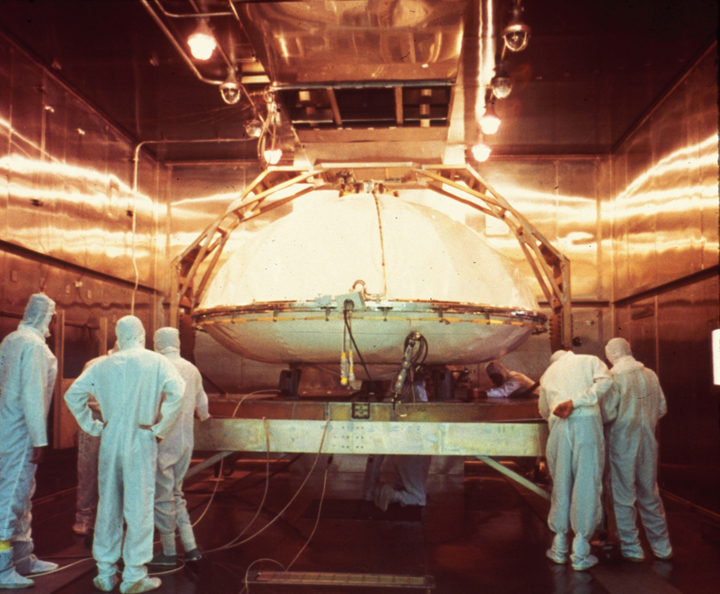
- Clean-room assembly
NASA’s Viking landers of the 1970s were baked at high temperatures for hours to kill all microbes.
2. Bioburden Reduction
Bioburden refers to the amount of microbial life on spacecraft surfaces. Engineers maintain strict cleanliness to reduce contamination risks.
3. Containment Facilities
Returned samples (such as from Mars or asteroids) are analyzed in specialized high-security laboratories with stringent biosafety measures.
4. Controlled Landing Zones
Space agencies select landing sites that minimize the risk of contaminating sensitive environments.
Human Missions and New Challenges
Human missions to Mars or other planets raise unprecedented planetary protection concerns:
1. Humans Are Microbe Carriers
Astronauts cannot be sterilized; they carry billions of microbes. Their habitats, suits, tools, and waste also pose contamination risks.
2. Risk of Backward Contamination Increases
Samples brought back by human explorers could be mixed with biological traces from Earth, complicating scientific analysis and increasing risk.
3. Ethical Dilemmas
Should we restrict human colonization to protect alien life?
Should we change planetary protection rules to allow settlement?
As space agencies plan for Mars colonization, these questions grow more urgent.
The Role of International Cooperation
Planetary protection is a global concern, not limited to individual nations. Every space mission affects the shared environment of the solar system.
Key players include:
- NASA
- ESA (European Space Agency)
- JAXA (Japan)
- ISRO (India)
- CNSA (China)
- SpaceX and private companies
Private companies introduce new risks, as their launch frequency and commercial incentives may conflict with strict planetary protection policies. Thus, universal guidelines and legal frameworks must evolve to include commercial spaceflight.
Future Directions in Planetary Protection
As technology evolves, planetary protection policies will need to adapt. Key future developments include:
1. Specialized Mars Sample-Return Facilities
NASA and ESA are planning a first-of-its-kind, ultra-secure biocontainment facility.
2. Ethical Frameworks for Life Detection
Policymakers must define actions if evidence of alien life is found.
3. Revised Rules for Human Missions
Human presence will require new strategies for contamination control.
4. Technological Innovations
Advances in sterilization, robotics, and machine learning will improve protection capabilities.
5. Legal Expansion
Space law must address accountability, commercial operations, and extraterrestrial environment rights.
Conclusion.
Planetary protection policies stand at the intersection of science, ethics, law, and global responsibility. As humanity prepares to explore Mars, Europa, and other potentially habitable worlds, protecting these environments becomes a moral and scientific imperative.