Introduction
For most of history, space exploration was the realm of scientists, engineers, and astronauts — not marketers. It was about rockets, research, and reaching the unknown, not brand identity or consumer engagement.
But as private companies, billionaires, and even lifestyle brands have entered the race to the stars, space has become a stage for marketing, storytelling, and corporate branding.
In the 21st century, space is no longer just about exploration — it’s about experience, innovation, and influence. The companies leading this charge — from SpaceX and Blue Origin to Coca-Cola and Red Bull — are redefining what it means to market in the Space Age.
This article explores how marketing and branding strategies are evolving in the new era of commercial space activity, why they matter, and what they reveal about humanity’s relationship with technology, ambition, and imagination.
The Shift from Exploration to Commercialization
The early decades of the space age — during the 1950s and 1960s — were dominated by government-driven missions. The branding focus was on national pride and scientific achievement, not commercial gain.
When Neil Armstrong stepped onto the Moon in 1969, his words — “one small step for man, one giant leap for mankind” — became a defining moment in human history. But they were also, unintentionally, one of the most powerful “brands” ever created for NASA and the United States.
Today, that same spirit is being reimagined by private companies and global brands that see space as a new market frontier.
As space becomes more accessible, it’s also becoming more marketable. The race is no longer just about who gets there first — but who tells the most compelling story about why it matters.
Space as a Brand
Space itself has become a powerful symbol — of innovation, ambition, futurism, and limitless potential. It embodies values that every modern brand aspires to:
- Exploration and curiosity
- Technology and progress
- Global unity and aspiration
- Adventure and boldness
Brands that associate themselves with space automatically gain an aura of visionary thinking and forward momentum.
This is why even companies outside the aerospace industry — from fashion to beverage brands — have begun incorporating space imagery, themes, and collaborations into their marketing campaigns.
For example:
- Red Bull Stratos (2012): Felix Baumgartner’s record-breaking skydive from the edge of space became one of the most iconic brand moments of the decade, merging science, adventure, and marketing brilliance.
- Omega Watches: The brand leveraged its association with NASA’s Apollo program (“The Moonwatch”) to become a symbol of durability and exploration.
- Lexus and Audi: Have featured futuristic, space-inspired vehicles in ads to communicate innovation and cutting-edge design.
Space is no longer abstract — it’s part of the consumer imagination.
New Space Brands: Elon Musk, Jeff Bezos, and Beyond
The new Space Age is being shaped not just by rockets, but by personalities. Entrepreneurs like Elon Musk, Jeff Bezos, and Richard Branson have turned their space ventures into powerful brands in their own right.
SpaceX (Elon Musk)
SpaceX’s brand identity revolves around disruption and progress. Musk’s messaging positions the company as the pioneer making space affordable, reusable, and ultimately a path to Mars.
- SpaceX’s launches are livestreamed globally, complete with sleek graphics and cinematic flair.
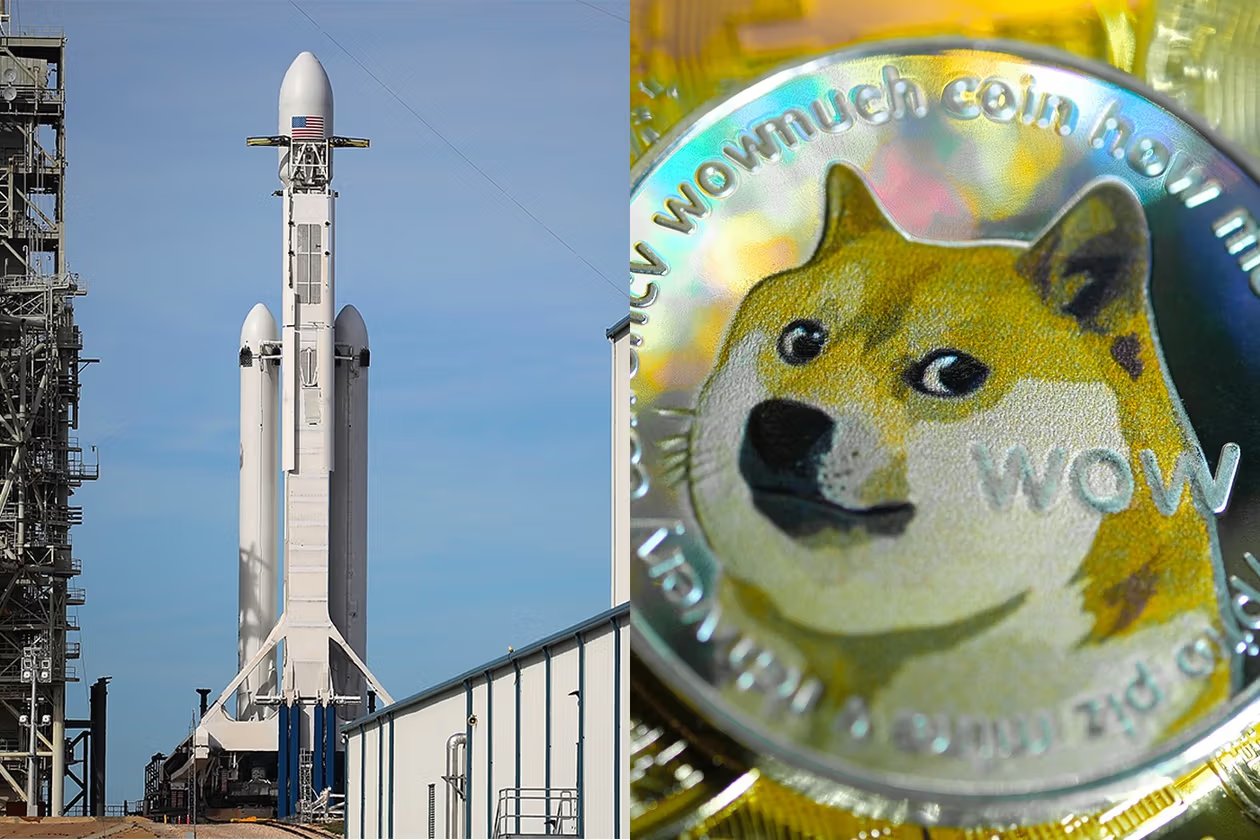
- Its Tesla Roadster launch aboard the Falcon Heavy rocket in 2018 — with “Starman” floating through space — was a marketing masterstroke, blending automotive branding, pop culture, and space exploration.
Blue Origin (Jeff Bezos)
Blue Origin’s brand emphasizes heritage, patience, and sustainability with its motto: “Gradatim Ferociter” — step by step, ferociously.
Bezos positions the company as a builder of infrastructure for future generations, aiming for long-term credibility rather than immediate spectacle.
Virgin Galactic (Richard Branson)
Virgin Galactic represents the luxury and experience-driven side of space. Its sleek spacecraft and high-profile passengers project a brand focused on adventure, exclusivity, and prestige — turning spaceflight into a lifestyle experience for the elite.
Together, these brands represent three different marketing approaches: technological heroism (SpaceX), visionary infrastructure (Blue Origin), and luxury adventure (Virgin Galactic).
Marketing Strategies in the Space Age
Space-age marketing combines elements of traditional advertising, storytelling, and digital innovation. Several key strategies are defining this new era:
Storytelling and Vision Marketing
Space companies don’t just sell rockets — they sell visions of the future.
Musk’s promise to make humans a “multi-planetary species” and Bezos’s dream of “millions of people living and working in space” are narratives, not products.
These stories create emotional investment, brand loyalty, and cultural momentum.
Spectacle and Public Engagement
Space launches are now media events, streamed to millions worldwide.
Live broadcasts, behind-the-scenes content, and dramatic visuals turn technical achievements into entertainment.
Social media amplifies this — turning every rocket launch into a viral moment of collective wonder.
Corporate Partnerships
Brands increasingly partner with space agencies or private firms to leverage space’s aspirational value.
- PepsiCo and Coca-Cola have tested products for zero gravity.
- Adidas collaborated with the ISS to test sportswear in microgravity.
- Lego works with NASA to inspire kids through space-themed sets.
These collaborations blur the lines between science, education, and marketing.
Space Tourism and Experience Branding
With companies like Virgin Galactic and Space Perspective promising commercial spaceflights, experience marketing is becoming a reality.
In the coming decades, brands will compete to offer exclusive experiences in orbit — not just products.
5. Sustainability and Responsibility
In an age of environmental consciousness, space companies must brand themselves as responsible explorers, not reckless adventurers.
NASA, SpaceX, and ESA now emphasize sustainable exploration, orbital debris reduction, and green propulsion — positioning their brands as ethical and future-conscious.
Rise of “Astro-Branding”
The blending of technology, entertainment, and space culture has given rise to what marketers call “Astro-Branding.”
Astro-Branding uses the language, imagery, and values of space to communicate innovation, aspiration, and transcendence.
It’s why you see stars, galaxies, and astronauts in everything from Nike ads to Apple product launches.
Space serves as the ultimate metaphor for creativity and limitless potential — a canvas upon which brands project their boldest ideas.
Challenges in Space Marketing
Despite its allure, marketing in the space era also presents significant challenges:
Ethical Concerns
Some critics argue that turning space into a branding platform commercializes a shared human heritage. Should the Moon or Mars become a billboard for Earth’s corporations?
Accessibility and Elitism
Space tourism and luxury branding risk alienating the public by catering only to the ultra-rich. Companies must balance exclusivity with inclusivity to maintain a positive image.
Authenticity
As more brands use space imagery, audiences become skeptical of “empty futurism.” Authentic engagement — through real science, education, or sustainability — is key to credibility.
Regulation and Public Relations Risks
Missteps in launches, environmental impacts, or safety failures can quickly damage a brand’s reputation. Transparency and ethics are crucial in maintaining public trust.
Future of Branding in Space
Looking ahead, the marketing landscape will evolve alongside technological progress. Potential trends include:
- Brand Sponsorships on Lunar Missions: Just as sports events feature logos, future missions may feature brand partnerships for funding.
- Augmented Reality Experiences: Brands could let consumers “join” space missions virtually through immersive AR and VR experiences.
- Interplanetary Advertising: As humans establish lunar or Martian outposts, brands will adapt to communicate across new environments and audiences.
- Cultural Branding: Space narratives will increasingly influence art, fashion, and entertainment — making “space-inspired” aesthetics a global trend.
The companies that lead in authenticity, creativity, and ethical responsibility will define the future of branding beyond Earth.