Introduction
The 21st century has witnessed a remarkable transformation in how humanity approaches space. Once dominated by government agencies like NASA and Roscosmos, the modern space industry now includes private corporations, startups, and international partnerships — creating a dynamic, fast-growing global ecosystem.
This expansion has sparked an equally critical challenge: developing a skilled, diverse, and future-ready workforce to sustain innovation in this high-stakes, high-tech industry.
The space workforce today is not limited to astronauts and engineers. It includes software developers, materials scientists, roboticists, policy analysts, data specialists, and educators — all contributing to what’s rapidly becoming one of the most complex and interdisciplinary industries on Earth.
This article explores the evolving needs, challenges, and strategies in workforce development within the global space sector — highlighting how nations, corporations, and educators are preparing the next generation for the final frontier.
Changing Landscape of the Space Industry
From Government Monopolies to Commercial Ecosystems
During the Cold War era, space activity was primarily government-driven. Agencies like NASA, the Soviet Space Program, and later ESA (European Space Agency) and ISRO (Indian Space Research Organisation) focused on scientific missions, national prestige, and defense.
The workforce, therefore, consisted mostly of aerospace engineers, physicists, and military-trained specialists.
However, the 21st century brought a shift — privatization and commercialization of space. Companies such as SpaceX, Blue Origin, Rocket Lab, and OneWeb have redefined what it means to work in space-related industries.
Now, the industry demands skills in AI, cybersecurity, robotics, materials science, and data analytics — reflecting the integration of digital technology with aerospace engineering.
New Space Economy
According to Morgan Stanley and Deloitte, the global space economy could exceed $1 trillion by 2040, encompassing sectors like:
- Satellite communications and internet (Starlink, OneWeb)
- Space tourism and exploration (Virgin Galactic, SpaceX)
- Earth observation and climate monitoring
- Lunar and asteroid resource development
Each of these fields requires a specialized, multidisciplinary workforce — combining science, technology, business, and international law.
Skills Driving the Modern Space Workforce
The future of space exploration depends as much on human talent as on rocket technology. Let’s break down the key skill areas shaping the workforce of tomorrow.
STEM and Engineering Skills
Engineering remains the backbone of space innovation. However, the scope of “aerospace engineering” has expanded dramatically.
Modern engineers need expertise in:
- Robotics and autonomous systems for planetary exploration.
- Advanced materials for lightweight spacecraft design.
- Propulsion systems, including nuclear and electric propulsion.
- Additive manufacturing (3D printing) for in-space construction.
Data Science and Artificial Intelligence
Satellites generate petabytes of data daily. Professionals skilled in AI, machine learning, and big data analytics are crucial for:
- Processing satellite imagery.
- Predicting orbital debris risks.
- Automating spacecraft operations.
AI-driven systems already help mission control centers manage large data flows efficiently — transforming how space operations are conducted.
Cybersecurity and Software Engineering
As space infrastructure becomes digital, cybersecurity has emerged as a top priority. Protecting satellites, communication systems, and control networks from cyberattacks is now a mission-critical function.
Software engineers, ethical hackers, and system architects form the invisible defense shield of the new space age.
Project Management and Policy Expertise
Space missions are complex, multinational undertakings that require coordination across governments, corporations, and research institutions.
Therefore, there’s a growing need for professionals in project management, regulatory compliance, diplomacy, and international space law.
Entrepreneurship and Business Development
With private investment pouring into the space sector, business professionals are increasingly needed to lead startups, funding programs, and commercialization strategies.
The next wave of “space entrepreneurs” will come not only from engineering schools but also from business and economics backgrounds.
Education and Training: The Foundation of a Space-Ready Workforce
STEM Education and Early Engagement
The journey to a space career often begins in the classroom. Encouraging STEM (Science, Technology, Engineering, Mathematics) education is essential to build the foundation for future innovation.
Programs such as NASA’s Artemis Student Challenges, ESA’s Education Office, and ISRO’s Young Scientist Programme (YUVIKA) aim to spark curiosity among students.
Educational initiatives now emphasize hands-on learning, such as:
- Building small satellites (CubeSats).
- Participating in robotics and rocketry competitions.
- Using simulation software to design space missions.
University Partnerships and Research Collaboration
Universities are increasingly partnering with government agencies and private companies to bridge academic research with industry needs.
Institutions like MIT, Stanford, Caltech, and Imperial College London host joint research programs in space propulsion, materials, and AI systems for orbital operations.
Collaborative projects between academia and industry — such as NASA’s Space Grant Program — help students gain exposure to real-world space challenges.
Technical Training and Apprenticeships
Not all space careers require advanced degrees. The industry also depends on technicians, fabricators, and systems operators trained through technical institutions.
Countries like Germany and Japan have introduced vocational training programs focused on aerospace manufacturing, ensuring that workforce development extends beyond traditional university education.
Continuous Learning and Upskilling
As technologies evolve, lifelong learning becomes crucial.
Space agencies and companies are now investing in reskilling programs for employees to adapt to AI-driven design, automation, and digital simulation.
Online platforms like Coursera, edX, and ESA Academy provide specialized courses on space systems, policy, and management.
Diversity and Inclusion in the Space Workforce
The success of the space industry depends not only on skills but also on diversity of thought and representation.
Historically, space careers were dominated by a narrow demographic. Today, there’s a concerted push toward inclusivity — ensuring that women, minorities, and professionals from emerging economies play a central role.
- NASA’s Artemis Program aims to land the first woman and person of color on the Moon.
- Organizations like Women in Aerospace (WIA) and Space Generation Advisory Council (SGAC) promote mentorship and global networking.
- Emerging nations in Africa, Asia, and the Middle East are investing in local space agencies and training programs to build homegrown expertise.
Diversity fosters innovation — and a more representative space workforce ensures that the benefits of exploration reach all humanity.
Role of Governments and Private Sector
Government Initiatives
Governments play a vital role in shaping workforce policies through funding, education, and regulation.
Programs such as:
- NASA’s Workforce Development Program
- European Space Agency’s Professional Training Framework
- India’s ISRO internship initiatives
provide structured pathways for students and professionals to enter the space sector.
Private Sector Leadership
Private companies now lead in recruiting and training new talent. SpaceX, Blue Origin, and Boeing invest heavily in in-house academies, offering internships and graduate programs that combine theory with real-world projects.
Startups also attract young innovators through open competitions, hackathons, and rapid prototyping challenges.
These efforts help close the skills gap between traditional aerospace education and the demands of modern space entrepreneurship.
Challenges in Workforce Development
Despite rapid progress, several challenges persist:
- Skill Shortages: There’s a global shortage of engineers, software developers, and data scientists specialized in space applications.
- Aging Workforce: Many experts who contributed to early space programs are nearing retirement, creating a knowledge gap.
- Education Gaps: Not all countries have access to advanced aerospace education or facilities.
- Funding Constraints: Training programs and research facilities require sustained investment.
- Brain Drain: Talented individuals from developing nations often migrate to established space economies, limiting domestic growth.
Addressing these challenges requires coordinated global efforts in policy, education, and industry collaboration.
Building a Sustainable Space Workforce
The next 30 years will see exponential growth in space-related industries — from lunar bases to orbital manufacturing and interplanetary missions.
To sustain this growth, workforce development must focus on:
- Interdisciplinary education: Integrating space science with AI, ethics, and environmental studies.
- International cooperation: Creating shared training programs and talent exchanges.
- Automation and human-AI collaboration: Preparing workers for hybrid roles with advanced robotics.
- Ethical leadership: Training professionals to ensure responsible exploration and resource use.
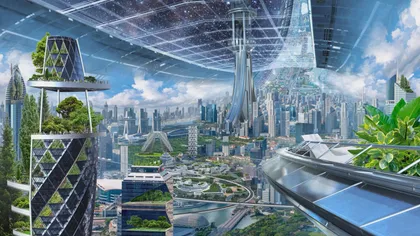
The workforce of the future won’t just build rockets — it will build civilizations beyond Earth.
Conclusion
The space industry stands at the intersection of human curiosity, technology, and innovation. But at its heart lies something deeply human — the people who make it possible.
From scientists and engineers to educators, technicians, and policy makers, workforce development in the space industry is about more than jobs; it’s about empowering humanity’s journey into the cosmos.
As space becomes a shared global enterprise, developing a skilled, diverse, and ethically grounded workforce will determine how far — and how wisely — we go.