Introduction
Space exploration has long captivated the human imagination — from the first satellite, Sputnik, to the Mars rovers and the James Webb Space Telescope. But behind the awe and adventure lies a complex and often controversial question: Is space exploration worth the cost?
Once driven purely by government ambition and geopolitical rivalry, space exploration has evolved into a multifaceted global economy. Today, the question isn’t whether we can afford to explore space — it’s how space exploration itself has become a powerful economic engine.
The economics of space exploration encompasses not only the costs of missions and infrastructure but also the returns — technological innovation, new markets, job creation, and even entirely new industries.
Cost of Reaching the Stars
Exploring space has always been expensive. Every kilogram launched into orbit requires immense energy, precision, and resources.
Historical Perspective
During the Apollo Program (1961–1972), the United States spent about $25 billion — over $150 billion in today’s dollars — to put humans on the Moon. Critics called it an extravagant expenditure at the time, but the program generated technological and economic benefits far beyond its initial investment.
NASA’s current annual budget stands at roughly $25 billion, or 0.3% of U.S. federal spending, while the global space economy surpassed $550 billion in 2024 and is projected to exceed $1 trillion by 2040 (according to Morgan Stanley).
Despite high upfront costs, the space sector’s growing commercialization and technological innovation have dramatically reduced expenses. Launching payloads to orbit once cost over $20,000 per kilogram; today, reusable rockets like SpaceX’s Falcon 9 have brought that down to under $2,000 per kilogram.
Government Funding: The Traditional Model
For most of space history, governments were the primary investors. They viewed space exploration as a public good, motivated by science, security, and national pride rather than profit.
Role of Public Investment
Public funding has been crucial for:
- Basic Research: Developing propulsion systems, life-support technologies, and materials science.
- Infrastructure: Building launch sites, tracking systems, and international space stations.
- Education and Workforce Development: Inspiring generations of scientists, engineers, and innovators.
Countries like the United States, China, Russia, and India continue to invest heavily in space programs for both strategic and economic reasons. The returns, though indirect, are profound — stimulating industries from computing to telecommunications.
NASA’s Economic Impact
According to NASA’s own 2023 economic report, the agency contributed $71 billion to the U.S. economy and supported over 350,000 jobs nationwide. For every dollar spent, NASA generates roughly $3 in economic output through innovation and commercial partnerships.
Rise of the Space Economy
The 21st century has witnessed a paradigm shift: space is no longer just a government-led endeavor — it’s an open marketplace. The emergence of private space companies has transformed exploration into a viable commercial enterprise.
Key Sectors of the Space Economy
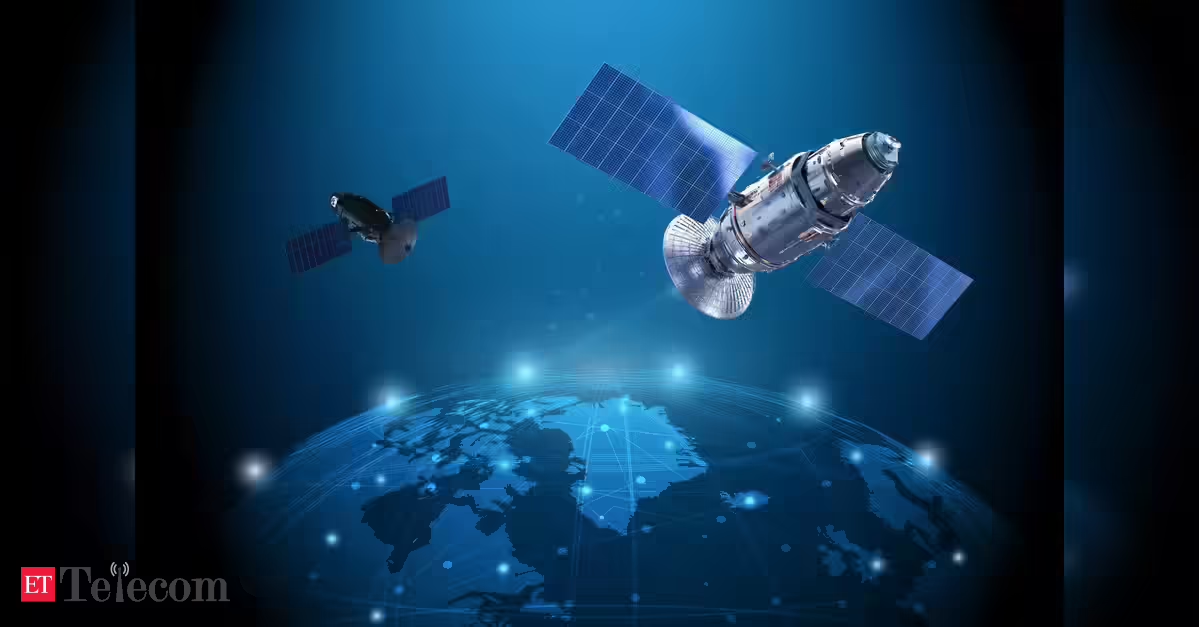
- Satellite Services: The largest sector, generating revenue from communications, weather forecasting, and Earth observation.
- Launch Services: Companies like SpaceX, Rocket Lab, and Blue Origin provide low-cost access to orbit.
- Space Tourism: Virgin Galactic and Blue Origin are pioneering suborbital flights for private citizens.
- Lunar and Mars Missions: Private and public collaboration aims to build long-term habitats and resource extraction systems.
- Manufacturing and Mining: Future plans include asteroid mining and orbital manufacturing of materials.
These activities drive competition, lower costs, and attract private investment — turning what was once a government monopoly into a diverse global economy.
Cost vs. Return: Measuring the Value
Direct Economic Returns
- Job Creation: Space projects create high-skill jobs in engineering, data science, robotics, and aerospace manufacturing.
- Industrial Growth: Demand for new materials, AI systems, and electronics spurs innovation in other sectors.
- Private Investment: Venture capital funding for space startups exceeded $10 billion in 2024, a record high.
Indirect Returns
- Technology Transfer: Innovations developed for space — from GPS to memory foam and solar panels — have become essential to modern life.
- Scientific Knowledge: Understanding the cosmos leads to new discoveries in physics, biology, and environmental science.
- National Prestige: Success in space enhances a country’s global reputation and geopolitical influence.
In short, while the immediate profits of exploration are hard to quantify, the long-term benefits ripple across economies and societies.
Economic Efficiency and Reusability
A major breakthrough in the economics of space exploration has been reusability. Traditionally, rockets were single-use — a billion-dollar vehicle destroyed after one launch. SpaceX’s Falcon 9 and Starship, along with Blue Origin’s New Shepard, revolutionized this by developing reusable boosters.
This innovation slashed launch costs, making commercial and scientific missions far more affordable. It also allowed for frequent launches, scaling space access the same way commercial aviation did for air travel.
Reusability exemplifies how private innovation is driving efficiency, enabling smaller nations, startups, and universities to participate in the space economy.
Economics of Exploration Beyond Earth
Exploring deep space — the Moon, Mars, and asteroids — involves long-term investments that could yield enormous returns in the future.
Lunar Economy
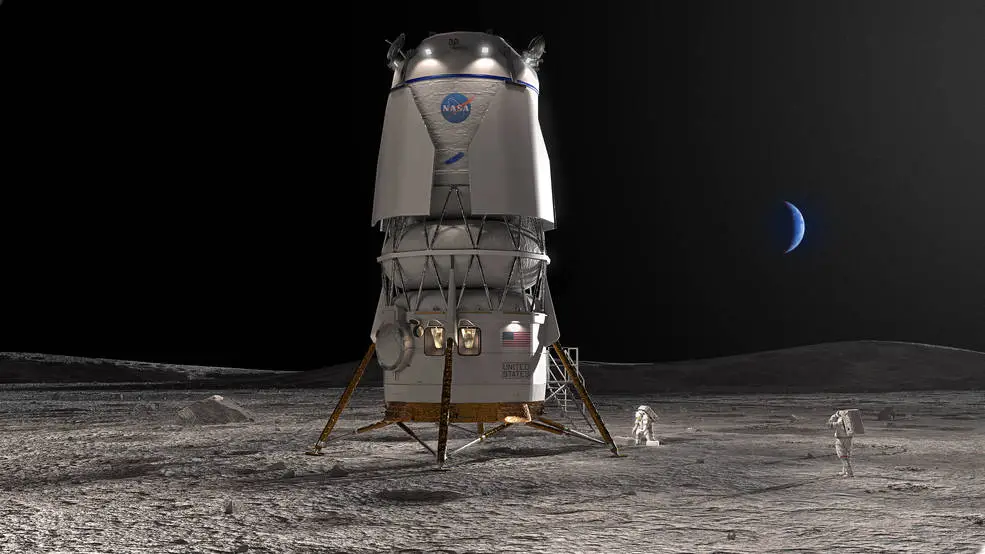
NASA’s Artemis Program and similar initiatives from China and India aim to establish a sustainable lunar presence. The Moon could serve as a base for scientific research, tourism, and even mining operations.
The potential discovery of water ice, which can be converted into rocket fuel, could make the Moon a refueling hub for Mars missions — reducing interplanetary travel costs.
Asteroid Mining
Asteroids contain valuable materials such as platinum, nickel, and rare earth elements. Estimates suggest a single asteroid could contain trillions of dollars’ worth of minerals. Although the technology is still developing, asteroid mining could one day reshape Earth’s resource economy.
Space Manufacturing and Energy
Microgravity environments allow for the production of ultra-pure materials and advanced pharmaceuticals. Meanwhile, space-based solar power — capturing sunlight in orbit and beaming it to Earth — could revolutionize global energy markets.
These ventures require massive initial investments but promise transformative payoffs.
Risks and Challenges
Space exploration remains risky and capital-intensive, posing several economic challenges:
High Upfront Costs
Building and launching spacecraft, maintaining research facilities, and training crews require billions in investment with uncertain returns.
Market Uncertainty
Many space ventures depend on untested business models, such as asteroid mining or commercial space stations.
Space Debris and Sustainability
Thousands of inactive satellites and debris fragments pose growing risks to valuable assets. Cleanup technologies and regulations add further costs.
Inequality of Access
Wealthy nations and corporations currently dominate the space economy. Ensuring fair access and preventing monopolization is an emerging concern.
Regulation and Policy Gaps
Existing space treaties, like the Outer Space Treaty of 1967, were written for governments, not corporations. The question of who “owns” resources mined from the Moon or asteroids remains legally ambiguous.
From Exploration to Economic Expansion
As the cost of access to space declines, humanity is entering a new era of space economics — one where exploration and commerce are deeply intertwined.
By 2035, experts predict:
- The space economy will exceed $1 trillion globally.
- Private space stations will replace the ISS as hubs for research and tourism.
- Lunar industries will begin operating with international cooperation.
- AI-driven analytics from space will power Earth’s economies.
In this future, space is not merely a destination — it’s an extension of the global economy.
Conclusion
The economics of space exploration are no longer a matter of cost alone; they are a matter of investment and return — in knowledge, innovation, and the human spirit.
Every dollar spent on space generates technological, educational, and economic dividends that far exceed its initial expense. From weather satellites to reusable rockets, from Mars rovers to global connectivity, space exploration fuels industries and inspires generations.
As public and private sectors unite in this cosmic enterprise, the question isn’t whether we can afford to explore space — it’s whether we can afford not to.
In exploring space, humanity isn’t just spending money to reach the stars — it’s investing in its own future, one launch at a time.