Introduction
Space has always inspired humanity — a realm of exploration, discovery, and technological triumph. Yet, as the number of rockets, satellites, and missions grows rapidly, a pressing new challenge has emerged: sustainability in space operations.
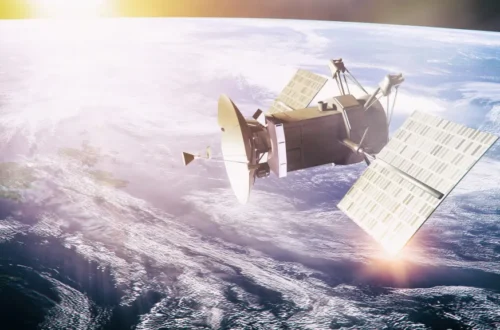
Much like the environmental concerns we face on Earth, space is now confronting its own version of pollution and overuse. Thousands of satellites, fragments, and defunct spacecraft orbit our planet, threatening both current and future missions. To ensure that space remains accessible, safe, and useful for generations to come, sustainable practices must become central to every aspect of space exploration and commercial activity.
Expanding Space Economy
The global space economy, valued at over $500 billion in 2024, is booming. Private companies and national space agencies are launching thousands of satellites for communication, navigation, climate monitoring, and defense.
Mega-constellations — vast networks of satellites operated by companies like SpaceX (Starlink), OneWeb, and Amazon’s Project Kuiper — promise to bring internet access to every corner of the Earth. However, this rapid expansion comes with a heavy environmental cost, both on Earth and in orbit.
The Growing Problem: Space Congestion
As of 2025, there are more than 10,000 active satellites and nearly 40,000 pieces of trackable debris orbiting the Earth. Millions of smaller fragments — from paint chips to metal screws — also zip around the planet at speeds of over 25,000 kilometers per hour. Even a tiny piece of debris can destroy a satellite upon impact.
This growing congestion, often called the “space junk crisis,” poses a serious threat to satellites, astronauts, and future missions.
Understanding Space Debris
Space debris, or orbital debris, includes non-functional satellites, spent rocket stages, and fragments from collisions or explosions. The problem is compounded because once debris forms, it often generates more debris — a phenomenon known as the Kessler Syndrome, proposed by NASA scientist Donald Kessler in 1978.
In this scenario, the density of objects in low Earth orbit (LEO) becomes so high that collisions occur more frequently, producing even more debris, potentially making space travel unsafe or impossible for decades.
To prevent this, sustainable space operations aim to minimize debris creation, remove existing debris, and promote responsible mission design.
Environmental Impact of Launches
While much attention is focused on orbital debris, sustainability challenges also exist on Earth. Rocket launches contribute to atmospheric pollution and climate change.
Key Environmental Concerns:
- Carbon Emissions: Rocket engines burn fuels such as kerosene, methane, or hydrogen. Some of these produce large amounts of CO₂ and black carbon that can damage the ozone layer.
- Aluminum Particles: Solid rocket boosters release aluminum oxide, which contributes to ozone depletion in the upper atmosphere.
- Noise and Local Pollution: Launch sites can disrupt wildlife, ecosystems, and local communities.
With launch frequency increasing — hundreds of rockets per year — these impacts are no longer negligible. Sustainable practices in launch operations are essential to ensure that space exploration does not harm our planet.
Principles of Sustainable Space Operations
To safeguard the orbital environment, the global space community is adopting key sustainability principles.
Design for Demise
Spacecraft and rocket components are being designed to burn up completely upon re-entry into Earth’s atmosphere, minimizing the risk of debris surviving and reaching the ground.
2. End-of-Life Deorbiting
Satellites must be deorbited within 25 years after mission completion, according to international guidelines. New technologies, such as propulsion modules and drag sails, help ensure controlle
Active Debris Removal (ADR)
Innovative missions are being developed to capture and remove space junk.
Examples include:
- ClearSpace-1 (ESA): A robotic arm designed to grab and deorbit defunct satellites.
- Astroscale’s ELSA-d mission: Demonstrated magnetic docking for debris collection.
Reusability and Resource Efficiency
Companies like SpaceX have pioneered reusable rockets, drastically reducing waste and cost. Each reusable Falcon 9 booster can be launched multiple times, reducing manufacturing emissions and debris.
Sustainable Manufacturing
Using green fuels, lightweight materials, and renewable energy in spacecraft production reduces the environmental footprint of the space industry on Earth.
International Efforts and Regulations
Sustainability in space is a global issue, requiring collaboration among governments, companies, and international organizations.
United Nations Office for Outer Space Affairs (UNOOSA)
UNOOSA leads efforts to promote the Long-Term Sustainability (LTS) Guidelines, a framework encouraging safe and responsible space operations. These guidelines cover debris mitigation, information sharing, and collision avoidance.
National Space Policies
Countries like the United States, Japan, and the European Union are introducing national regulations for debris management and sustainability reporting. For instance, the U.S. Federal Communications Commission (FCC) now requires commercial satellites in low Earth orbit to deorbit within five years after mission completion.
International Collaboration
Projects like the Space Sustainability Rating (SSR) — developed by the World Economic Forum, ESA, and MIT — evaluate companies based on how sustainable their missions are. The rating encourages transparency and accountability in the growing space industry.
Role of Technology in Sustainable Space
Technology is at the heart of the sustainability revolution in space. Several innovations are leading the way:
. Green Propulsion Systems
New fuels such as hydroxylammonium nitrate (HAN) and liquid methane are replacing toxic chemicals like hydrazine. These greener alternatives reduce pollution and make spacecraft safer to handle.
Autonomous Collision Avoidance
Artificial intelligence and machine learning systems can now predict and avoid collisions by analyzing orbital paths and automatically adjusting a satellite’s trajectory.
Satellite Servicing and Refueling
Instead of replacing old satellites, robotic servicing missions can refuel, repair, or upgrade them — extending their lifespan and reducing waste. NASA’s OSAM-1 (On-orbit Servicing, Assembly, and Manufacturing) mission is a key example.
. In-Orbit Manufacturing and Recycling
Future technologies aim to recycle debris into usable materials directly in space. This concept could allow in-orbit manufacturing of new satellites or structures using existing debris, reducing the need for new launches.
Challenges to Achieving Space Sustainability
Despite progress, several barriers remain:
Lack of Enforcement
Many sustainability guidelines are voluntary, with no global enforcement mechanism. Nations and companies sometimes prioritize economic or strategic goals over environmental ones.
High Costs
Developing debris removal or sustainable fuel technologies is expensive, and startups may struggle to fund them without incentives.
Competition and Secrecy
Geopolitical rivalries make data sharing and cooperation difficult. Without transparency, it’s hard to coordinate debris management effectively. Growing Launch Rates
As more companies and nations enter the space race, launches are becoming more frequent, making debris management increasingly urgent.
Future of Sustainable Space Operations
The coming decades will define how responsibly humanity uses space. If sustainable practices are prioritized, space can remain a shared resource that benefits all. Some expected developments include:
- Global Treaties for Space Sustainability: International laws to manage orbital traffic and debris.
- Circular Space Economy: Recycling and reusing materials from old satellites to build new ones.
- Green Launch Sites: Eco-friendly spaceports using renewable energy and minimal ecological disruption.
- Integration of AI: Smarter systems to manage traffic and optimize satellite lifecycles.
Ultimately, the goal is to create a self-sustaining orbital ecosystem — one that supports exploration and commerce without endangering future missions.