Introduction
For decades, space was the domain of government agencies — NASA, the European Space Agency (ESA), and Russia’s Roscosmos. The exploration of the cosmos was driven by national pride, science, and politics — not profit. But the 21st century has brought a profound shift. Space is no longer just a frontier for exploration; it’s becoming a frontier for investment.
From reusable rockets to satellite internet and asteroid mining, space startups are emerging as one of the most exciting and potentially lucrative sectors in global business. Investors — from venture capital firms to government-backed funds — are pouring billions into a new “space race” led by innovation, not rivalry.
This new era, often called “NewSpace,” is transforming how humanity interacts with the universe — and how investors think about the future.
Rise of the NewSpace Economy
The NewSpace movement refers to the shift from state-controlled space programs to commercially driven private enterprises. Over the past two decades, the rise of companies such as SpaceX, Blue Origin, and Rocket Lab has proven that private firms can build rockets, launch satellites, and even send humans into space — often more efficiently and cost-effectively than governments.
This success has created a ripple effect. Hundreds of smaller startups are entering the market, offering specialized services — from propulsion systems and satellite imaging to in-space manufacturing and data analytics.
According to Morgan Stanley, the global space economy, valued at about $500 billion in 2024, could surpass $1 trillion by 2040, with startups leading much of this growth.
Investors Are Looking Toward Space.
Investing in space startups is no longer science fiction. There are solid economic, technological, and strategic reasons why investors are turning their attention upward.
1. Falling Costs of Access to Space
The single biggest change driving investment is lower launch costs. Thanks to reusable rockets pioneered by SpaceX, the price per kilogram to orbit has dropped from around $20,000 to under $2,000. This reduction opens the door for smaller companies and startups to launch satellites, test technologies, and develop space-based services.
Explosive Growth in Satellite Demand
The demand for satellite-based data — for internet, GPS, weather, and Earth observation — is skyrocketing. Companies like Starlink (SpaceX) and OneWeb are launching massive constellations to provide global broadband. Startups are emerging to supply the components, software, and analytics that support these systems.
Government Support and Partnerships
Governments now see the private sector as an essential partner. Programs like NASA’s Commercial Crew and Cargo Programs have demonstrated the success of public-private collaboration. In Europe, the ESA Business Incubation Centres (ESA BICs) nurture dozens of space startups annually.
Technological Spillover
Investments in space drive advancements in robotics, AI, materials science, and renewable energy — technologies that often have applications on Earth. For investors, this means space startups are not only futuristic but also diversified technology bets.
Key Areas of Investment in Space Startups
The space economy is broad, with numerous emerging sub-industries. Here are the primary sectors attracting investment today:
Satellite Technology and Services
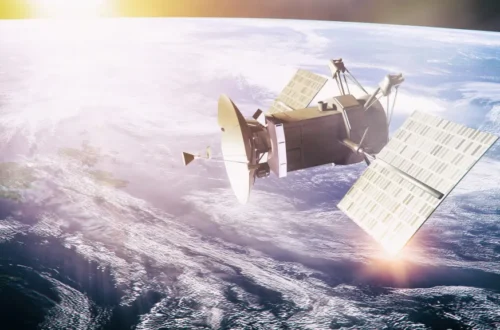
This is currently the largest segment of the commercial space sector. Startups are developing miniaturized satellites (CubeSats), constellation networks, and Earth observation systems that provide real-time data for agriculture, logistics, climate monitoring, and defense.
Example startups: Planet Labs, Spire Global, Iceye.
Launch and Propulsion Systems
Innovation in launch technology is booming. Startups are working on smaller, cheaper, and more efficient rockets tailored for lightweight payloads, as well as green propulsion using non-toxic fuels.
Example startups: Rocket Lab, Relativity Space, Astra.
Space Data and Analytics
With thousands of satellites producing terabytes of data daily, startups that can process, analyze, and visualize space data are in high demand. Their applications range from climate science to military intelligence.
Example startups: Orbital Insight, Capella Space.
In-Space Manufacturing and Infrastructure
A futuristic but fast-growing field, this involves building and maintaining structures in orbit, such as space stations, solar panels, and even manufacturing facilities.
Example startups: Axiom Space, Varda Space Industries.
Space Tourism and Lunar Ventures
Though still in its early stages, companies are investing in space tourism, lunar mining, and habitat construction. The long-term potential for business operations on the Moon and Mars is drawing investor attention.
Example startups: Blue Origin, Space Perspective, ispace.
Investors Enter the Space Market
There are several ways for investors — both institutional and individual — to gain exposure to the growing space industry.
Venture Capital (VC) and Private Equity
Many leading VC firms now have dedicated space portfolios. Funds such as Seraphim Space, Space Capital, and Lux Capital specialize in early-stage space technology investments. These funds identify startups with scalable business models and strong technical teams.
Public Markets
Several space-related companies are now publicly traded, including Virgin Galactic (SPCE), Rocket Lab (RKLB), and AST SpaceMobile (ASTS). Investors can buy shares or invest in space-focused ETFs like the Procure Space ETF (UFO).
Government and Corporate Contracts
Startups often secure revenue through contracts with NASA, ESA, or defense agencies. Investors view these partnerships as validation of a company’s credibility and long-term potential.
Crowdfunding and Angel Investment
New platforms allow individuals to invest smaller amounts in early-stage space ventures. This democratization of investment mirrors what happened in tech startups in the 2000s.
Risks and Challenges in Space Investment
While space startups offer enormous potential, they also come with unique risks.
High Capital Requirements
Developing rockets or satellites requires heavy upfront investment. Many startups fail to reach profitability before running out of capital.
Technical Complexity
A single engineering failure can destroy millions in assets. Unlike software startups, space technology is hardware-intensive and high-risk.
Regulatory Barriers
National and international space laws are still evolving. Launch permissions, frequency licensing, and export controls can delay or complicate operations.
Market Saturation and Competition
With hundreds of companies entering the same niches — like satellite imaging or launch services — not all will survive. Investors must distinguish between innovation and redundancy.
Long Time Horizons
Returns on space investments often take years, sometimes decades, to materialize. This requires patient capital and a long-term vision.
Future of Space Investment
Despite its risks, the momentum behind space startups is unstoppable. Several trends point to a thriving future:
- Miniaturization: Smaller, cheaper satellites will continue to drive growth in Earth observation and connectivity.
- Reusable Rockets: Further reductions in cost will make space more accessible to smaller players.
- Space Infrastructure: The next big investment wave may focus on building orbital stations, solar power satellites, and lunar bases.
- Sustainability: Startups working on space debris removal and green propulsion will attract environmentally conscious investors.
Moreover, as nations like India, Japan, and the UAE enter the commercial space arena, global competition will fuel more innovation and opportunity.