Introduction
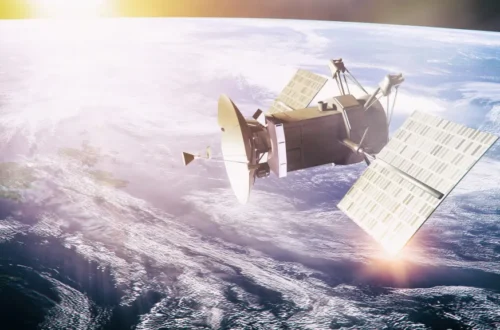
As space exploration transitions from government-led missions to a dynamic commercial ecosystem, space logistics and transportation systems have become critical enablers of sustained activity beyond Earth. Moving people, cargo, fuel, and data across vast distances in space is no longer a theoretical challenge—it is a growing industry supporting satellite constellations, space stations, lunar missions, and future interplanetary travel. Just as shipping networks and transportation infrastructure power the global economy on Earth, space logistics will define the pace, scale, and profitability of the emerging space economy.
The Evolution of Space Transportation
Early Space Transport Systems
In the early decades of space exploration, transportation systems were simple but expensive. Rockets were single-use vehicles designed to achieve orbit and accomplish narrowly defined missions. The focus was on national prestige and scientific discovery rather than efficiency or scalability. Launch costs were extremely high, limiting access to space to a handful of governments.
Transition to Reusability
The introduction of reusable systems marked a major turning point. Space shuttles attempted partial reusability, but high maintenance costs limited their efficiency. The true transformation came with modern reusable rockets, which dramatically reduced launch costs and increased launch frequency. This shift laid the foundation for a more robust space logistics network.
Key Components of Space Logistics Systems
Space logistics encompasses much more than rocket launches. It includes a complex chain of transportation, storage, refueling, and coordination systems.
1. Launch Vehicles
Launch vehicles are the backbone of space transportation. Modern rockets are designed to transport satellites, cargo, and crew into various orbits. Advances in propulsion, materials, and automation have improved reliability and reduced costs, making regular access to space possible.
2. Orbital Transfer Vehicles
Once payloads reach orbit, they often require additional transportation. Orbital transfer vehicles move satellites between orbits, deliver cargo to space stations, or reposition spacecraft. These systems function like space “trucks,” optimizing fuel use and extending mission flexibility.
3. Space Stations as Logistics Hubs
Space stations act as critical nodes in space logistics. They receive supplies, serve as research platforms, and support human presence in orbit. Future commercial space stations are expected to operate as logistics hubs, manufacturing centers, and refueling points.
4. Cargo and Crew Transport Systems
Specialized spacecraft are designed to transport either cargo or humans. Cargo vehicles focus on efficiency and payload capacity, while crew vehicles prioritize safety, life support, and reusability. Both are essential for sustaining long-term operations.
In-Space Refueling and Propellant Depots
One of the most transformative concepts in space logistics is in-space refueling.
Why Refueling Matters
Currently, spacecraft must carry all their fuel from Earth, greatly limiting payload capacity and mission duration. In-space refueling allows spacecraft to:
- Travel farther with smaller launch vehicles
- Support reusable spacecraft
- Enable complex missions to the Moon and Mars
Propellant Depots
Propellant depots—fuel storage facilities in orbit or on the Moon—are expected to become central elements of future space logistics. These depots could use fuel transported from Earth or produced using local resources, such as lunar ice converted into hydrogen and oxygen.
Lunar and Cislunar Transportation Networks
As interest in the Moon resurges, new logistics systems are being developed to support sustained lunar operations.
Cislunar Space
The region between Earth and the Moon, known as cislunar space, is emerging as a key economic and transportation zone. Efficient transportation routes in this region are essential for:
- Delivering cargo to lunar bases
- Supporting scientific missions
- Enabling commercial activities
Lunar Landers and Rovers
Lunar transportation systems include landers capable of delivering payloads to the surface and rovers designed to transport materials and equipment across lunar terrain. These systems must operate in extreme conditions, including low gravity and temperature extremes.
Interplanetary Transportation Systems
Mars Transportation Challenges
Transporting cargo and crew to Mars presents enormous logistical challenges. Travel times range from six to nine months, requiring:
- Advanced life-support systems
- Radiation protection
- Reliable propulsion technologies
Transportation systems must also support return missions, making reusability and refueling essential.
Advanced Propulsion Concepts
Future interplanetary logistics may rely on:
- Nuclear thermal propulsion
- Electric propulsion systems
- Hybrid propulsion technologies
These systems could significantly reduce travel times and costs, making regular interplanetary transport feasible.
Role of Private Companies in Space Logistics
The private sector has become a driving force in space transportation innovation.
Commercial Launch Providers
Private companies now dominate the launch market, offering flexible services to governments and businesses. Competition has led to lower prices and faster development cycles.
Logistics-as-a-Service
Space logistics is evolving into a service-based industry. Companies offer end-to-end solutions, including launch, deployment, maintenance, and deorbiting of satellites. This model mirrors terrestrial logistics companies that manage global supply chains.
Public-Private Partnerships
Governments increasingly rely on commercial providers for cargo and crew transport. These partnerships reduce costs, encourage innovation, and allow public agencies to focus on exploration and research.
Challenges Facing Space Logistics Systems
Despite rapid progress, space logistics faces several challenges:
High Costs and Economic Risk
Although launch costs have decreased, space transportation remains expensive. Large upfront investments and long development timelines pose financial risks.
Space Debris and Traffic Management
The growing number of objects in orbit increases collision risks. Effective space traffic management is essential to protect logistics infrastructure.
Technological Reliability
Failures in transportation systems can jeopardize entire missions. High reliability and redundancy are critical, especially for human transport.
Regulatory and Legal Issues
International regulations must adapt to accommodate new logistics systems, private operators, and resource utilization.
The Future of Space Logistics and Transportation
Over the next few decades, space logistics is expected to evolve into a fully integrated interplanetary supply network.
Key Future Trends
- Fully reusable launch and spacecraft systems
- Autonomous logistics operations using AI
- In-orbit manufacturing and assembly
- Lunar-based fuel production
- Interplanetary cargo routes
As infrastructure expands, space logistics will support industries such as tourism, mining, manufacturing, and scientific research.