Introduction
Space — once the domain of superpower governments and elite astronauts — has now become the newest arena for business innovation and economic expansion. The commercialization of space marks a revolutionary shift from publicly funded exploration to private enterprise-driven ventures, opening vast opportunities for investment, technology, and global collaboration.
From reusable rockets to satellite internet, asteroid mining, and space tourism, private companies are turning what was once science fiction into a thriving commercial reality. As costs decrease and technology advances, space is no longer just humanity’s next frontier — it is rapidly becoming the next major marketplace.
The Evolution of Space Commercialization
The commercialization of space began decades ago, though it has accelerated dramatically in the 21st century. Initially, space activity was dominated by governments, especially during the Cold War Space Race between the United States and the Soviet Union. The goal was political prestige, scientific discovery, and national security — not profit.
However, after the Apollo missions and the collapse of the Soviet Union, interest in space exploration waned. In the late 20th century, new commercial opportunities began to emerge — particularly in satellite communications. Companies like Intelsat and Inmarsat demonstrated that space-based technology could be highly profitable.
The turning point came in the 2000s, when private entrepreneurs — notably Elon Musk (SpaceX), Jeff Bezos (Blue Origin), and Richard Branson (Virgin Galactic) — began investing billions to develop commercial launch vehicles and space services. Their efforts transformed space from a government-led endeavor into a competitive global industry.
Key Drivers of Commercial Space Growth
Several factors have fueled the rapid commercialization of space:
1. Technological Advancements
Innovation has made space more accessible and affordable. The development of reusable rockets — pioneered by SpaceX’s Falcon 9 — has reduced launch costs by up to 70%. Miniaturization and automation have also led to the rise of small satellites and CubeSats, which can be launched in clusters at lower costs.
2. Private Investment and Venture Capital
Over the past decade, billions of dollars have flowed into the commercial space sector. According to Space Capital, global space investment surpassed $300 billion by 2023. Investors view space as a high-risk, high-reward market with immense long-term potential.
3. Government Partnerships and Deregulation
Governments now actively encourage private participation. NASA’s Commercial Crew and Commercial Resupply programs allow private firms to deliver cargo and astronauts to the International Space Station (ISS). The U.S. Space Policy Directive also promotes collaboration between public and private sectors, creating a more business-friendly environment.
4. Global Demand for Connectivity and Data
Modern economies depend on satellite-based services — from GPS navigation and internet communication to weather forecasting and environmental monitoring. As global data demand grows, so does the need for commercial space infrastructure.
Major Sectors in the Commercial Space Economy
The commercial space industry encompasses several interconnected sectors, each contributing to a rapidly expanding ecosystem.
1. Satellite Technology and Communications
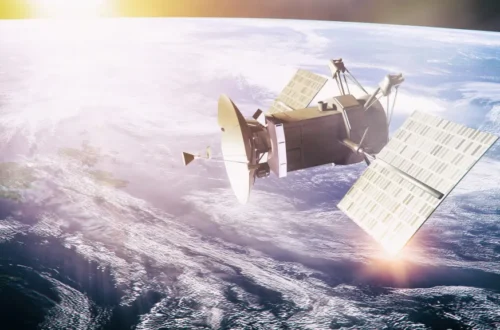
Satellites are the backbone of the space economy, supporting telecommunications, broadcasting, and data analytics. Companies like SpaceX (Starlink), OneWeb, and Amazon (Project Kuiper) are deploying mega-constellations of thousands of satellites to deliver global broadband internet — especially to rural and underserved regions.
Beyond communications, Earth observation satellites provide critical data for agriculture, logistics, climate monitoring, and national security. These services form the largest share of the $500 billion global space economy.
Launch Services
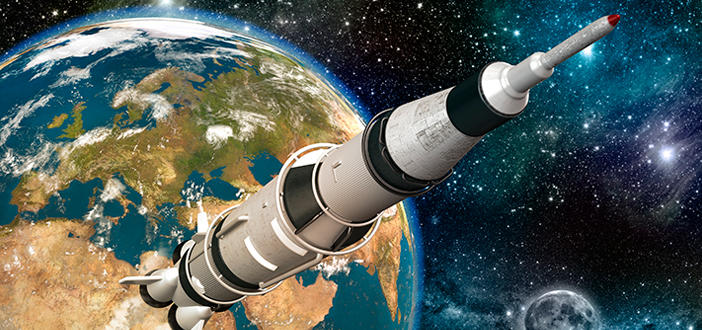
The market for launching payloads into orbit is highly competitive. SpaceX leads with its reusable Falcon 9 and Falcon Heavy rockets, while Blue Origin, Rocket Lab, and Relativity Space are developing their own advanced launch systems.
Reusable rocket technology has slashed the cost per kilogram of cargo, enabling startups and small nations to access space for the first time. This “democratization” of space access has spurred innovation and entrepreneurship worldwide.
3. Space Tourism
Commercial space travel — once a dream — is now a reality. Companies such as Virgin Galactic, Blue Origin, and SpaceX offer suborbital and orbital flights for private citizens.
While ticket prices currently range from $200,000 to $55 million, future technological improvements may reduce costs, allowing more people to experience space. Space tourism also drives investment in spacecraft safety, design, and passenger comfort, with potential spillover benefits for broader space exploration efforts.
4. Space Mining and Resource Utilization
Asteroids and lunar surfaces contain vast quantities of valuable materials such as platinum, rare earth elements, water ice, and helium-3. Companies like Planetary Resources and Asteroid Mining Corporation are exploring ways to extract these materials for industrial use.
Mining water ice could support future colonies by producing rocket fuel (hydrogen and oxygen) and providing drinking water for astronauts. Although still in the conceptual phase, space resource utilization could become a trillion-dollar industry in the coming century.
5. Space Infrastructure and Manufacturing
The next step in commercialization involves building infrastructure in orbit — such as space stations, hotels, and manufacturing facilities. Companies like Axiom Space plan to build the first commercial space station, while Orbital Assembly Corporation envisions rotating space hotels for tourists and researchers.
Microgravity manufacturing may also revolutionize industries on Earth by producing ultra-pure materials, advanced semiconductors, and high-strength alloys impossible to make under Earth’s gravity.
Economic and Strategic Implications
The commercialization of space offers immense economic benefits but also strategic challenges.
Economic Growth and Innovation
The space economy drives innovation across sectors — from robotics and artificial intelligence to renewable energy and telecommunications. Space-based research often leads to “spin-off technologies” that benefit daily life, such as GPS, memory foam, and weather forecasting.
Employment and Education
The growing space industry is creating thousands of new jobs in engineering, software, materials science, and astronautics. Universities and governments are now emphasizing STEM education to meet the workforce demands of the space age.
Global Competition and Collaboration
Countries like China, India, and the UAE are developing commercial space programs to compete with the U.S. and Europe. This competition fuels innovation but also raises concerns about space militarization and resource ownership.
International collaboration, guided by treaties like the Outer Space Treaty (1967), remains crucial for maintaining peaceful and fair use of space resources.
Challenges and Ethical Considerations
Despite enormous potential, the commercialization of space faces several obstacles:
Space Debris and Environmental Impact
The proliferation of satellites and rockets increases the risk of space debris, which can damage spacecraft and threaten future missions. Companies must develop sustainable practices, such as satellite recycling and debris removal technologies.
Inequality and Accessibility
Currently, space remains accessible only to wealthy nations and corporations. Ensuring that developing countries and smaller companies can participate fairly is essential for global balance.
Legal and Regulatory Uncertainty
Existing space laws were designed for government missions, not commercial enterprises. New policies must address property rights, mining claims, liability, and safety standards to prevent conflicts and exploitation.
4. Ethical and Environmental Responsibility
Commercial space activities must prioritize sustainability — minimizing rocket emissions, preventing contamination of celestial bodies, and ensuring that space remains a shared heritage for all humanity.
Future of Space Commerce.
Looking ahead, the commercialization of space is expected to accelerate dramatically. Analysts predict the global space economy could exceed $1 trillion by 2040.
Future developments may include:
- Lunar bases supporting research and mining.
- Mars colonies funded by private partnerships.
- AI-managed satellites providing global connectivity.
- Orbital manufacturing hubs producing next-generation materials.
- Interplanetary transportation systems for cargo and passengers.
As private companies expand into new frontiers, humanity will witness the birth of an interplanetary economy — one that integrates space into everyday life, commerce, and global progress.
Conclusion.
The commercialization of space is not just a technological breakthrough — it is a fundamental transformation of the global economy. Once limited to superpowers, space is now open to entrepreneurs, investors, and innovators eager to explore its limitless potential.
From satellites and tourism to mining and manufacturing, business in space is reshaping industries, creating jobs, and driving humanity’s expansion beyond Earth.