Introduction
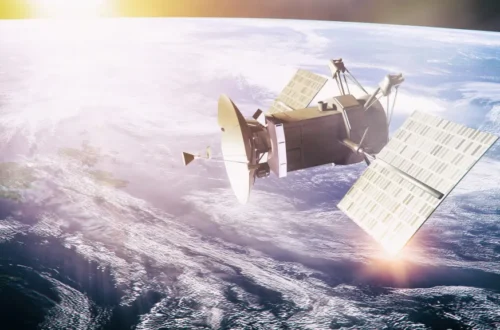
The vastness of space once symbolized endless opportunity — an infinite frontier free from pollution and human interference. However, as humanity’s presence in orbit grows, so too does the clutter we leave behind. Space debris, or “orbital junk,” has become one of the most serious threats to the future of space exploration, satellite operations, and even global communications.
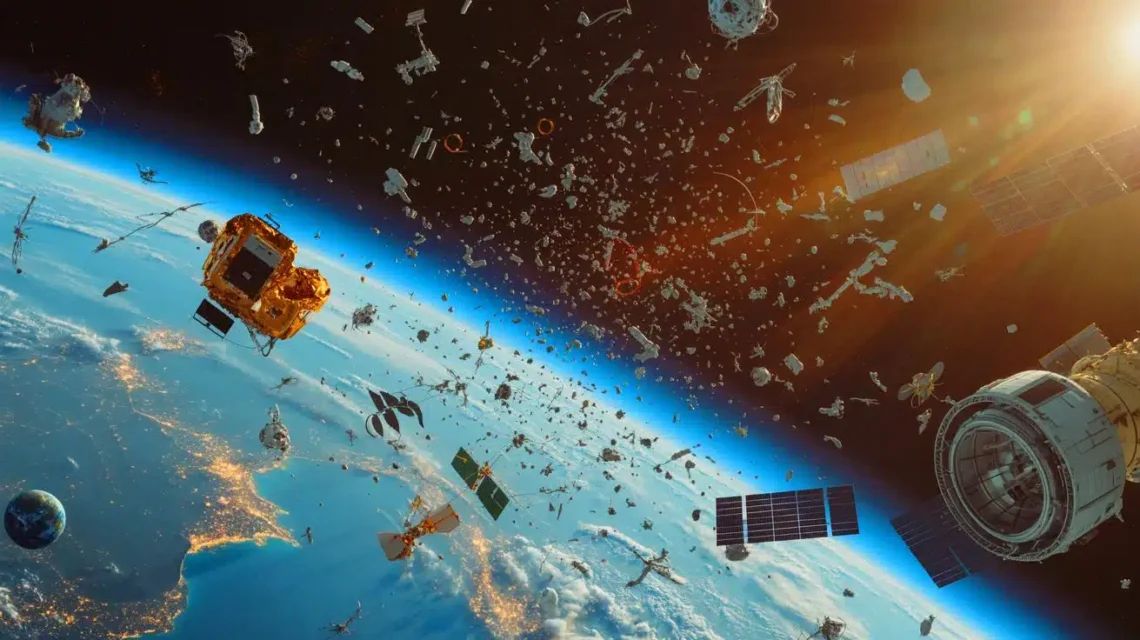
From defunct satellites and spent rocket stages to fragments from collisions and explosions, millions of pieces of debris now orbit Earth. These fragments, traveling at speeds exceeding 27,000 kilometers per hour, pose catastrophic risks to spacecraft, astronauts, and critical infrastructure like weather satellites and GPS systems.
The growing problem of space debris is not just a technical challenge — it is an environmental and ethical issue. Just as nations have learned the importance of preserving Earth’s ecosystems, we must now take environmental responsibility in orbit to ensure that space remains a safe and sustainable domain for future generations.
What Is Space Debris?
Space debris refers to any human-made object in orbit that no longer serves a useful purpose. The European Space Agency (ESA) estimates that as of 2025, there are:
- Over 36,000 tracked debris objects larger than 10 cm.
- About 1 million pieces between 1 and 10 cm.
- More than 130 million fragments smaller than 1 cm.
Even the smallest pieces of debris — like paint flakes or metal shards — can cause serious damage due to their immense velocity.
Sources of space debris include:
- Defunct satellites that have run out of fuel or stopped functioning.
- Rocket stages left behind after launches.
- Fragments created by collisions or explosions.
- Discarded materials, such as lens covers, bolts, and tools lost during space missions.
Since the launch of Sputnik 1 in 1957, human activity in orbit has steadily increased. Today, more than 8,000 active satellites share space with tens of thousands of derelict objects — creating an increasingly crowded and dangerous orbital environment.
The Risks of Space Debris
1. Collisions and the Kessler Syndrome
The most severe risk posed by orbital debris is the Kessler Syndrome, a concept introduced by NASA scientist Donald Kessler in 1978. It describes a self-perpetuating chain reaction: as collisions between satellites create more fragments, these in turn cause further collisions, leading to an exponential increase in debris.
If left unchecked, such a scenario could render certain orbits — especially low Earth orbit (LEO), where most satellites operate — unusable for decades or even centuries.
2. Threats to Operational Satellites and Space Stations
Modern society depends heavily on satellites for navigation, communication, weather forecasting, and defense. A single collision can destroy a satellite worth hundreds of millions of dollars and disrupt essential services on Earth.
The International Space Station (ISS) frequently performs avoidance maneuvers to dodge debris. Even a small fragment can puncture its outer shell, posing life-threatening risks to astronauts.
3. Economic and Strategic Impacts
The cost of replacing damaged satellites, cleaning up debris, and protecting future missions runs into billions of dollars annually. Moreover, space debris represents a strategic risk, as collisions could be mistaken for hostile acts, potentially escalating geopolitical tensions in orbit.
Major Incidents That Highlight the Problem
1. 2007 – China’s Anti-Satellite Test
In 2007, China destroyed one of its weather satellites using a missile in an anti-satellite (ASAT) test. The explosion generated over 3,000 trackable debris pieces and tens of thousands of smaller fragments — one of the largest single sources of debris in history.
2. 2009 – Iridium–Cosmos Collision
A defunct Russian satellite (Cosmos 2251) collided with an active U.S. communications satellite (Iridium 33) at high speed, creating nearly 2,000 fragments. This event demonstrated how unplanned collisions between satellites can have long-term consequences for orbital safety.
3. 2021 – Russian ASAT Test
In another destructive test, Russia destroyed its Cosmos 1408 satellite, creating over 1,500 large debris fragments and threatening the ISS. The event reignited international debate about military activity in space and the urgent need for responsible conduct.
These incidents underscore how quickly space can become unsafe if nations and companies fail to act responsibly.
Environmental Responsibility in Orbit
1. Understanding Space as an Environment
For decades, “environmentalism” was associated only with Earth’s ecosystems — forests, oceans, and the atmosphere. But space, too, is an environment: a shared, finite resource that must be managed sustainably.
Environmental responsibility in orbit means treating space as part of humanity’s collective heritage, where preservation and precaution take precedence over short-term profit or national rivalry.
2. International Efforts and Guidelines
Several international organizations and treaties aim to address orbital debris:
- The Outer Space Treaty (1967): Establishes that outer space shall be used for peaceful purposes and that states are responsible for their activities.
- The UN Committee on the Peaceful Uses of Outer Space (COPUOS): Promotes guidelines for debris mitigation and long-term sustainability.
- Inter-Agency Space Debris Coordination Committee (IADC): Provides best practices, such as designing satellites for safe deorbiting.
In addition, agencies like NASA and ESA have introduced policies requiring satellites in low Earth orbit to deorbit within 25 years after mission completion.
Strategies for Mitigating Space Debris
1. Designing for Sustainability
Modern spacecraft are increasingly designed with end-of-life disposal systems, such as onboard propulsion or drag sails that help them reenter the atmosphere safely.
SpaceX, for example, programs its Starlink satellites to automatically deorbit after about five years — minimizing the risk of long-term debris accumulation.
2. Active Debris Removal (ADR)
Removing existing debris is one of the greatest technical challenges of our time. Several innovative methods are being developed:
- Robotic arms or nets to capture large defunct satellites.
- Laser ablation systems to nudge smaller debris into reentry.
- Magnetic tethers and electrodynamic drag devices to slow down debris in orbit.
Japan’s JAXA, ESA’s ClearSpace-1, and private startups like Astroscale are leading early debris removal missions, paving the way for a cleaner orbit.
3. Space Traffic Management (STM)
As orbital space becomes busier, traffic management is essential to prevent collisions. Real-time data sharing between governments and companies allows for collision prediction and avoidance.
Future STM systems could function similarly to air traffic control, coordinating safe orbits and deorbiting schedules for thousands of satellites.
The Role of Private Companies
Private companies now dominate space launches and satellite operations. Firms like SpaceX, OneWeb, and Amazon’s Project Kuiper are deploying thousands of satellites in mega-constellations to provide global internet.
While these constellations expand global connectivity, they also multiply the risk of orbital congestion. Therefore, these companies carry a moral and environmental duty to manage debris responsibly.
Encouragingly, several have begun implementing self-deorbiting systems, improved collision avoidance software, and transparency in sharing orbital data — important steps toward corporate accountability in space.
Ethical and Legal Challenges.
The challenge of space debris also raises deep ethical questions: Who owns responsibility for cleaning orbit? Should future generations bear the cost of today’s negligence?
Legally, the issue remains complex. The Liability Convention (1972) states that nations are liable for damage caused by their space objects. However, enforcement is rare, and no clear mechanism exists for shared cleanup or compensation.
An emerging idea is to treat orbital space as a global commons, similar to the oceans or atmosphere — managed through international agreements, fees, and sustainability quotas. Such a framework would align environmental responsibility with shared economic incentives.
Future of Sustainable Space.
Looking ahead, the challenge of space debris will shape the next phase of space exploration. The “Green Space Movement” — promoting environmentally conscious design and governance — is gaining momentum among scientists, policymakers, and industry leaders.
Technological solutions like biodegradable satellites, on-orbit recycling, and autonomous cleanup drones are being developed to keep orbits safe and usable.
Ultimately, humanity’s long-term future in space depends on our ability to balance exploration with stewardship. Just as we are learning to protect Earth’s ecosystems, we must now apply the same principles to the space environment — our shared cosmic ecosystem.
Conclusion.
Space debris is no longer a distant or hypothetical problem — it is an urgent and growing crisis that threatens the sustainability of space itself. Every collision, every discarded rocket stage, and every defunct satellite adds to a chain of risk that could jeopardize future exploration, communication, and scientific progress.
Taking environmental responsibility in orbit is therefore not optional — it is essential. Governments, private companies, and international organizations must work together to establish clear rules, cleaner technologies, and stronger accountability.